Press "Enter" to skip to content

Autore: Giangiuseppe Pili

Giangiuseppe Pili è Ph.D. in filosofia e scienze della mente (2017). E' il fondatore di Scuola Filosofica in cui è editore, redatore e autore. Dalla data di fondazione del portale nel 2009, per SF ha scritto oltre 800 post. Egli è autore di numerosi saggi e articoli in riviste internazionali su tematiche legate all'intelligence, sicurezza e guerra. In lingua italiana ha pubblicato numerosi libri. Scacchista per passione. ---- ENGLISH PRESENTATION ------------------------------------------------- Giangiuseppe Pili - PhD philosophy and sciences of the mind (2017). He is an expert in intelligence and international security, war and philosophy. He is the founder of Scuola Filosofica (Philosophical School). He is a prolific author nationally and internationally. He is a passionate chess player and (back in the days!) amateurish movie maker.

10. I limiti della conoscenza intellettuale

Vuoi leggere l’intero articolo? Vai qui!

Iscriviti alla Newsletter!


Ci sono due limiti alla conoscenza intellettuale. Un limite è comune all’intera conoscenza umana. Il secondo limite è, invece, peculiare dell’intelletto. Vediamo il limite generale. La nostra conoscenza è fondata sui dati di senso e sull’ordine che ad essi dà l’intelletto. Ma oltre questo? Oltre questo c’è il ‘forse’. Infatti, noi non possiamo conoscere null’altro che non sia inscritto all’interno dell’intelletto dai dati di senso, sia esso un finale giudizio analitico o sintetico. Ma i dati di senso da dove vengono? Questa è, in Kant, una domanda relativamente mal formulata perché è a partire da essi che noi abbiamo infatti conoscenza: senza dati di senso, non abbiamo alcuna conoscenza, compresa conoscenza di noi stessi perché, per Kant, noi conosciamo le nostre categorie pure proprio a partire dall’interazione di esse con i dati di senso. Insomma, per Kant non abbiamo un accesso privilegiato ai nostri stessi stati mentali se non nel senso che possiamo conoscerli attraverso le esperienze e le operazioni che la stessa mente esperisce e compie. Quindi, evidentemente, si tratta in qualche modo di una conoscenza indiretta dei nostri stessi stati mentali. Benissimo, ma allora vi propongo un ragionamento.
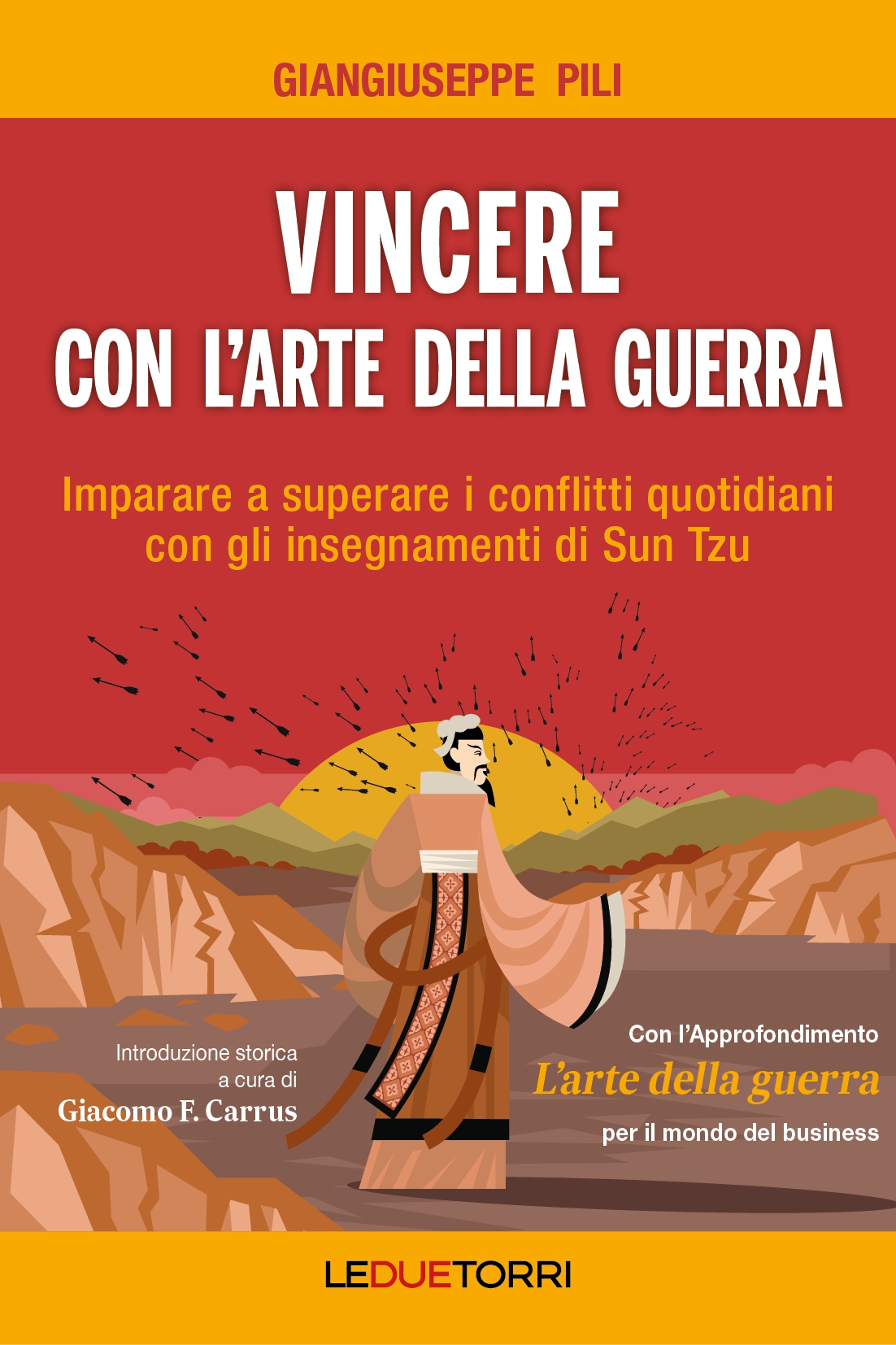
Vincere con l’arte della guerra – Imparare a superare i conflitti quotidiani con gli insegnamenti di Sun Tzu

E’ con mio estremo piacere pubblicare questo instant book – Vincere con l’arte della guerra – Imparare a superare i conflitti quotidiani con gli insegnamenti di Sun Tzu – insieme a Le Due Torri – la principale casa editrice di riferimento di Scuola Filosofica e della sua collana! Per soli 2,99 sarete guidati alla comprensione de L’arte della guerra di Sun Tzu, capolavoro della strategia militare cinese apparentemente banale da leggere ma estremamente difficile da capire e affascinante da esplorare. Esso, a mio giudizio, fa parte della triade fondamentale insieme alla strategia dell’approccio indiretto di Basil Liddell Hart e alla concezione generale della guerra di Carl Von Clausewitz. Di tutti questi ho avuto modo di scrivere diverse volte, specialmente nel mio maggior volume Filosofia pura della guerra. Spero davvero che questa versione in linea con i massimi principi scientifici, coniugata alla piacevolezza della scrittura, possa aiutare il lettore verso un processo di miglioramento nella vita e nel business!

Ethics of the intelligence profession – What is the ethical framework of a real intelligence analyst?

Dr Giangiuseppe Pili, Dr Francesco Margoni


 Abstract

The new project on the intelligence studies – “What is the ethical framework of a real intelligence analyst?” has the potential to substantially contribute to one the most debated topics in the intelligence studies literature, that is the ethics of the intelligence profession. Our approach is relatively new according to what we found in the literature. The aim of the project is to explore the research question – what is the analysts’ ethical framework in their own view – from a quantitative rather than purely qualitative perspective.

How COVID-19 impacted Scuola Filosofica?

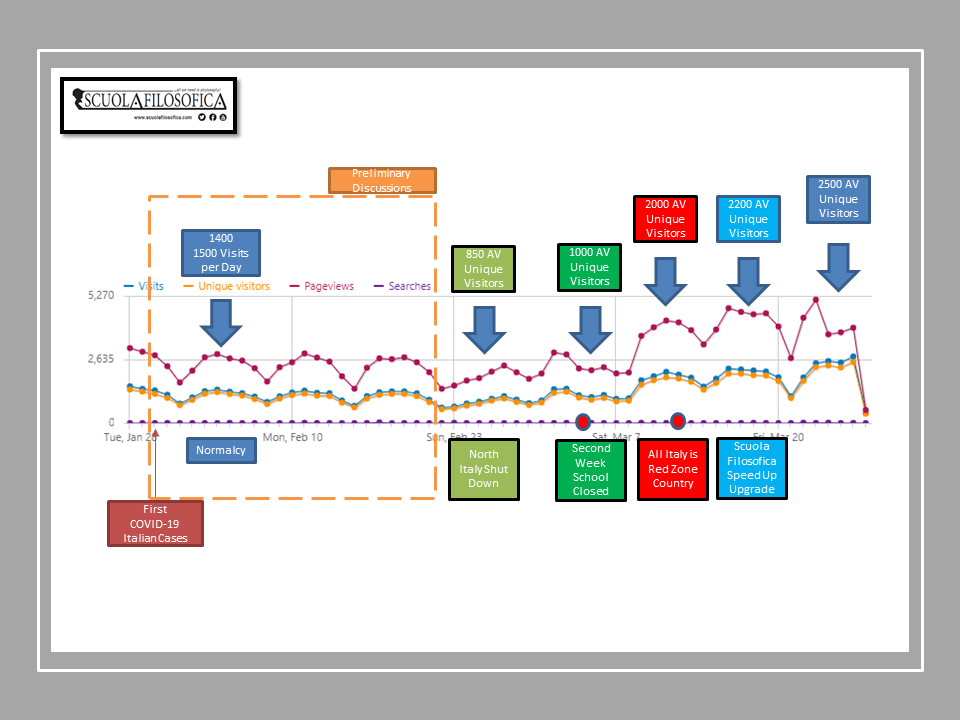
How COVID-19 impacted to Scuola Filosofica (Philosophical School – www.scuolafilosofica.com) – Philosophical Blog? Before giving you the data, the state of normalcy of SF was 1500/2000 unique visitors per day with peaks in the middle of the week (Monday-Wednesday and Sunday) and down on Friday and Saturday (with a 30/40% of decrease). SF has more than 10 years of existence, 35 authors, +1150 web pages, 10 technicians, and it is active in the main social media (Facebook, Twitter, YouTube and Linkedin – through the Team) but the visitors are heavily based on google researchers (95% of all the traffic). So, above is a daily graph of the last 2 months and a half (26 Jan – Today). It must be said that SF knew a constant increase of its unique visitors since its inception. It increased every year steadily and, sometimes, with impressive jumps ahead as in the last year (300.000 unique visitors). However, along with COVID-19 SF boomed, even though this boom has to be coupled with the speed-up technical arrangement due to the excess of average time of page generation (more that 7 seconds). Interestingly, now that the page generation time felt to slightly less than a second (0,85%) the number of bounces (one page view) jumped from 30% to 80% but the average time of visit is now to 3′ minutes and a half.

Is a chess player and intelligence analyst? – Chess and intelligence

FelixMittermeier – https://pixabay.com/it/photos/scacchi-pezzi-degli-scacchi-2730034/


Pili, Giangiuseppe, (2019) “Is a chess player and intelligence analyst? How to learn from chess how to improve intelligence analysis”, American Intelligence Journal, Vol 36, Issue 2, 74-85


It is with a distinct pleasure and honor that I announce my last publication in the esteemed American Intelligence Journal – The journal for intelligence professionals! AIJ is one of the oldest American journals of intelligence studies and it is one of my favorites. When I read the email today my heart jumped (safely!, safely!). For a young researcher in the field of intelligence grow up with the documentaries of the WWII, and personal appreciation for what US have done during the Cold War, I couldn’t have been more happy to see my name inside that journal. I want personally to thank again many people that helped me in delivering the paper: Michael Landon-Murray (assistant professor), Claudio Selleri (Le Due Torri, Publisher), Herman Grooten (IM, trainer and great chess writer), Uberto Del Prato (CM, and environment intelligence practitioner), Roman Kolodii (intelligent and careful reader), Matteo Canini (neuro-psychologist who provided the psychological literature about chess and intelligence), and last but not least the editor of the journal, professor William Spracher. Thank you all for all your help and support!

Improving your business awareness through philosophy – Structured Classification Analysis for Little Business Firms

Interested in the project? – Write us & ask for it!

scuolafilosofica_AT_gmail.com


Project denomination – “Improving your business through philosophy – Semantic Classification System for Little Business Firms” – Ontological Pizzeria! – Ancora dei Baruffi – Pizzeria Storica

Partners & Organizing Institutions – Azione Filosofica (Cultural Association), Scuola Filosofica (Blog & Social Media), Ancora dei Baruffi – Pizzeria Storica (Restaurant – Take away)

Project Manager – Dr Giangiuseppe Pili

Project Roles – Project Manager, Analyst, Ontological Designer & Video Maker + External Referee

Philosophical lessons learned these days

As my embedded philosophical attitude is hard to die, after long days in shock and shut eyes, I try now to consider some lessons learned directly from my experience.

First, people were irrational in the past and they are still irrational in the present. No matter of what we tell to ourselves in this “technological” age, there will be still irrationality among us. This is true everywhere but it is especially true in places in which there is no way to ground a rational open debate without getting out with fear of being considered a dinosaur. Irrationality is the plague of our time, the time of the human beings. We should fight it with all our intelligence but the reality is that intelligence is not much, artificial or human, especially when a certain threshold of spread fear and panic are already inside most of the minds. There is no way to consider numbers and facts because the behavior is so far from logic that the only thing you can do is to try to keep calm, breath and think clearly that life is not in your hands. Therefore, others’ life is not in your hands either. 

The mystery of capitalism is doing things with documents

Abstract

In this post I analyze briefly why the mastery of documents is a necessary art in the age of technology. Documents are indispensable for the very existence of capitalism and it is how we express our own capital. However, the nature of documents (their ‘ontology’) is quite complex but it can be easily understood with a bit of curiosity and perseverance. Finally, I will consider how to apply the lessons learned in order to maximize the impact of your own capital.


Introduction

The title of this post is basically a combination between two titles The mystery of capital and “How to do things with documents”. The first is a book written by the Chilean economist Hernando de Soto (1941), which is a cornerstone of the economic development in the third world. Instead, “how to do things with documents” is a Barry Smith’s slogan which is a paraphrase of the John Austin’s philosophical masterpiece How to do things with words (1962), which was the first attempt toward a philosophical foundation of the speech acts. For instance, saying “check” in the appropriate time and circumstance count as an action on the chessboard. Smith is a philosopher that “left the mothership of philosophy” to land to something different, something closer to computer scientist than anything else.

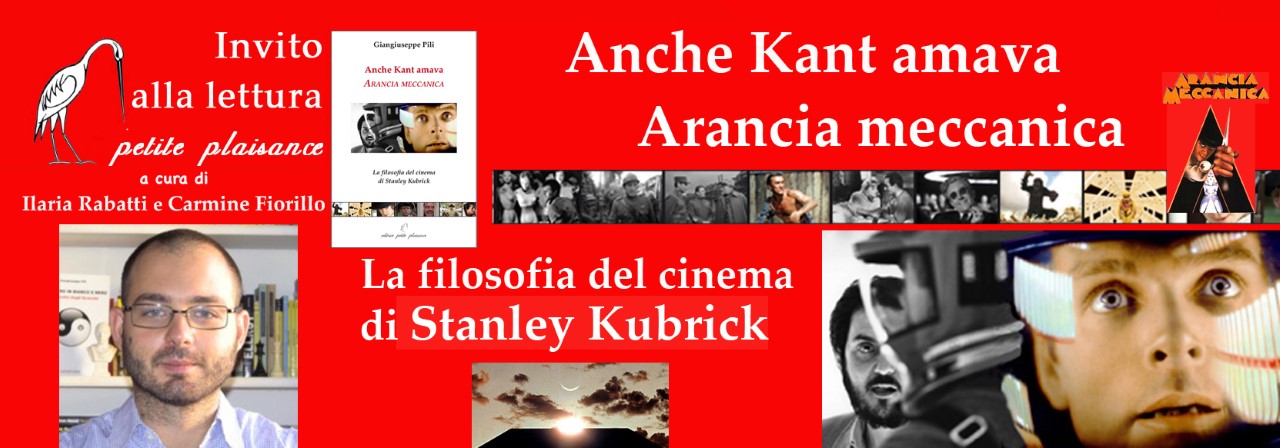
Anche Kant amava arancia Meccanica – La filosofia di Stanley Kubrick

Pili G., (2019), Anche Kant amava Arancia Meccanica – La filosofia di Stanley Kubrick, Pistoia: Petite Plasiance


Ebbene sì!, è uscito anche prima del 2020 quello che considero uno dei miei migliori lavori in lingua italiana! Anche Kant amava Arancia Meccanica – La filosofia di Stanley Kubrick uscito per Petite Plaisance! La prefazione del professor Silvano Tagliagambe impreziosisce il volume con il suo taglio preciso e puntuale. Ringrazio il dottor Chiariglione per avermi invitato a jointare la sua bellissima collana sul cinema e filosofia. Il libro è stato dedicato a tre tra i miei più cari amici lombardi. Qui potete trovare il link dove visionare e acquistare il volume. Se desiderate acquistare questo libro insieme ad uno dei libri della collana di Scuola Filosofica potete scrivermi direttamente a scuolafilosofica_AT_gmail.com!

Questo è uno dei migliori lavori che abbia mai scritto e spero che il pubblico dei lettori possa gradire la lettura quanto io ho tratto gioia dallo scriverlo. 

Discovering together Turi Kumwe Onlus!

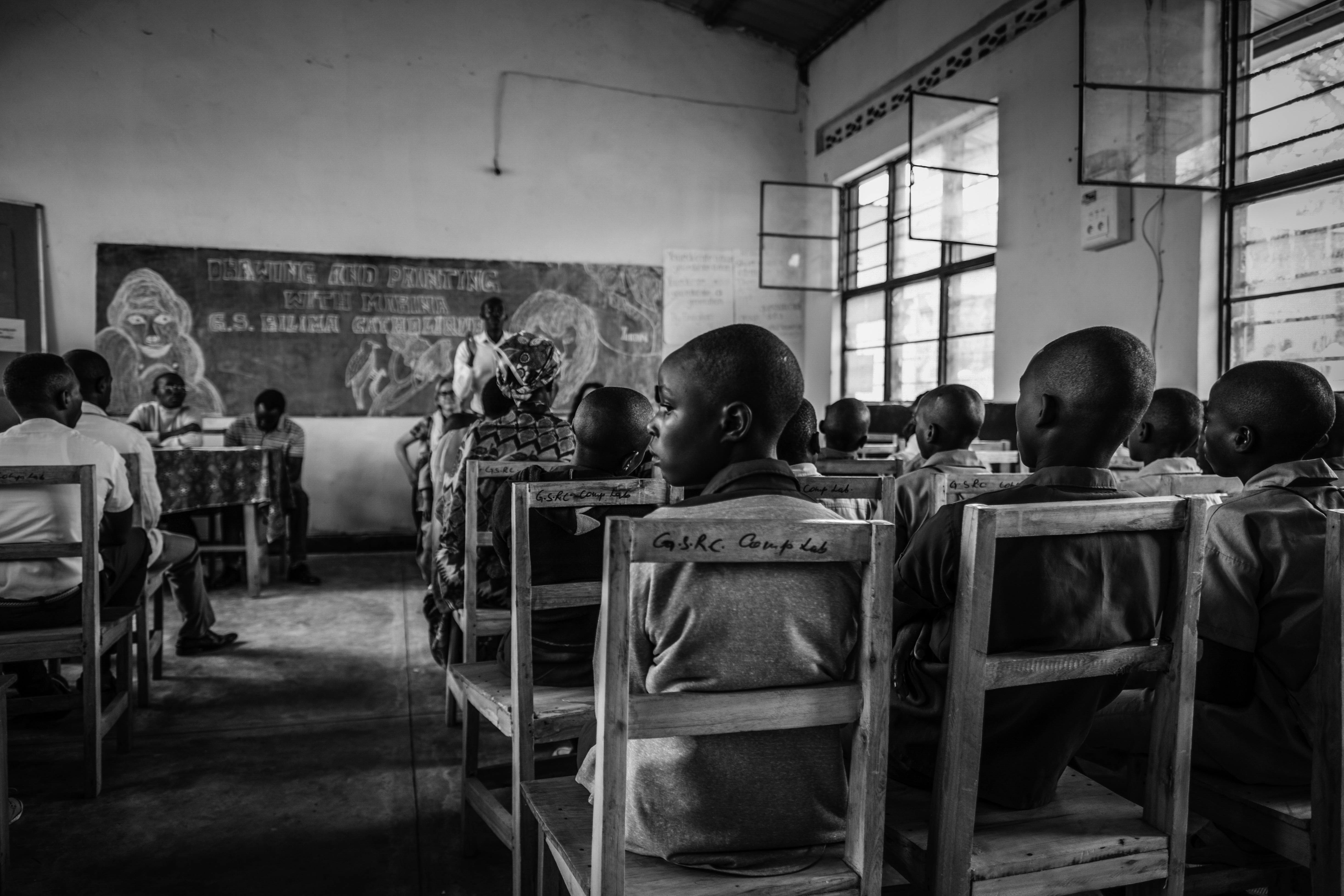
Attribution Picture – Massimiliano Pescarolo

Today I am super-happy to post an interview edited along with Andrea Maffei about the Turi Kumwe Onlus. The Turi Kumwe Onlus (TK) is an active association both in Rwanda and Italy whose mission is to help the most sensible and disadvantage parts of the Rwanda’s society, mainly, but not only, children and women. Indeed, as our Philosophical School’s readers and, even more, our Philosophical Action’s members know full well, one of our long-lasting missions is to defend culture and reason through the diffusion of cultural initiatives whose values overlap ours. Therefore, when Andrea Maffei kindly asked me for a possible common project, I immediately agreed and I readily gave the green light with all the enthusiasm I have. I want to kindly and warmly thank Andrea, I wish to Dr Ilaria Buscaglia (president of the volunteer organization) all the best possible and I hope all the best for the TK in order to ground the possibility for a better condition in both Italy and Rwanda and, I would say, in the world. We badly need similar initiatives in our countries inside and outside Italy and EU. Beside, a remark is necessary: Massimiliano Pescarolo’ and Rwandan Chess Federation’s photos are breathtaking and I personally thank them for having shared them with us. Without further ado, I live the stage to the questions and, especially, to the answers. To all the people interested, I encourage them in keeping in touch directly with Turi Kumwe Onlus!