
A Venezia, per la Biennale d’arte 2026, si può visitare per la prima volta il Padiglione di Nauru, con opere in collettiva tramite autori nati in Paesi diversi: Kauw Tsitsi, CPS (Khaled Ramadan ed Alfredo Cramerotti), Patricia Jacomella Bonola, Tedo Rekhviashvili, Sylvia Grace Borda, Ron Laboray, Dorian Batycka, Khaled Hafez, Iv Toshain, Stefano Cagol. La sede si trova allo Spazio Castello 3683. Il titolo della mostra è Aim inundated: imagining life after land. Uno degli artisti, Khaled Ramadan, ha fatto la curatela. Innanzitutto bisogna ricordare che Nauru è il più piccolo fra gli Stati insulari del mondo. Così gli sconvolgimenti climatici dell’era contemporanea toccherebbero davvero la “sensibilità” dei residenti (mancando l’approssimazione “difensivista” per sottovalutazione del tipo < Perché mai dovrebbe succedere proprio a me? >, che in Occidente blocca per “miopia” i governi, in tante ma inutili riunioni). Nauru ha conosciuto una storia di “pressioni” interne, sull’estrazione del fosfato da velocizzare. Ma non si temette il pericolo dell’esaurimento. Oggi la dialettica tra il consumismo e l’ambientalismo rimane. C’è l’innalzamento ineluttabile degli oceani, mentre l’industria estrattiva progetta di riqualificarsi dai fosfati al manganese, sui fondali che hanno una biodiversità meritevole di preservazione. Venezia vive un simile paradosso, fra le paratoie del MOSE ed il Canale dei Petroli. La bandiera di Nauru indica la posizione dell’isola rispetto alla linea dell’equatore. Tuttavia non si può colonizzare una stella. L’umanità dovrà ripulire la Terra dall’inquinamento. La storia ci attesta che nemmeno l’esotismo ha evitato il colonialismo, purtroppo. A Nauru la percentuale d’immigrati è alta; loro virtualmente “solleveranno” il falso atollo, in quanto (r)accolti, alla morbidezza per una calamita. L’isolamento progredisce tramite la coralità. Ricordiamo il motto a chiasmo di Alexandre Dumas che caldeggia il < tutti per uno, uno per tutti >. Nauru non ha l’arcipelago. Dunque diventa più spontaneo l’appoggio ad un organismo sovranazionale, per correggere le criticità appartenenti a tutti. Ad esempio il consumo della plastica mondiale si concentra in un falso continente, il quale galleggia sull’Oceano Pacifico. Il fosfato è utilizzato per detergere, anche se a Nauru la natura lascia le spiagge bianchissime; il manganese è utilizzato per le batterie, con l’isolamento di Nauru che necessita d’un minimo di connessioni, come dal turismo.
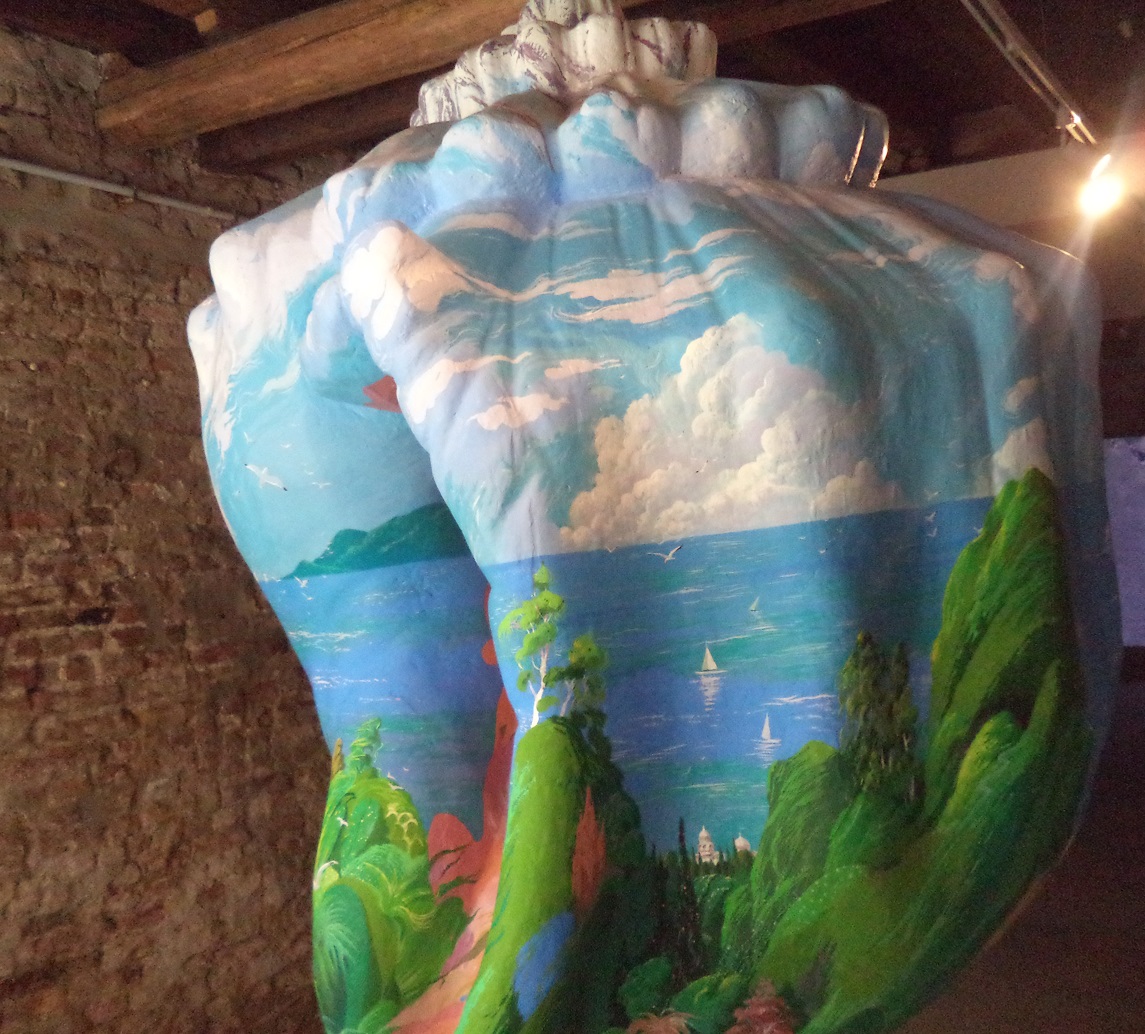
A Venezia, Tedo Rekhviashvili ha installato la scultura dal titolo Sea that remembers. Si rivisita una conchiglia, ingigantendola. E’ quella che l’artista raccoglieva da bambino, sulla costa del Mar Nero, in Abcasia, avvicinandola all’orecchio per udire il rumore delle onde. Però subentra la simbologia dello scudo protettivo. La Russia ha occupato l’Abcasia, dopo un conflitto con la Georgia, del quale l’artista è cittadino per nazionalità. Dunque l’orecchio potrebbe risuonare pericolosamente in via traumatica, dagli spari. Ma come si percepirà simbolicamente la riappropriazione della terra persa, da parte dell’artista? Si rappresenterà un cuore per l’iceberg. L’erba verdeggiante avrà riportato le pulsazioni della luce negli oscuri abissi per le alghe. C’è la grande nuvola all’orizzonte per tentare l’ebollizione del ghiaccio. In Abcasia possiamo visitare il fiume più corto del mondo (Reprua) e la grotta più profonda del mondo (Krubera). Se l’anima fosse immortale, dal cuore, allora i sentimenti sarebbero le venature d’una conchiglia, giacché percepiamo l’udito come il senso appropriato per raggiungere l’intimità, a parità d’astrazione. Una grotta diventa un iceberg per il crepaccio. Ma lo speleologo, calandosi, riuscirà a “sventagliare” la “conchiglia” della roccia? La catena del Caucaso avrebbe perfino le “chele” del Mar Nero e del Mar Caspio. Per Mircea Oprea, vedendo l’arcobaleno nel cielo, si vorrà tagliarlo con le forbici, inaugurando un paradiso in terra. La società non colonizza l’aria. Ma è la spiritualità a fendere il volo.
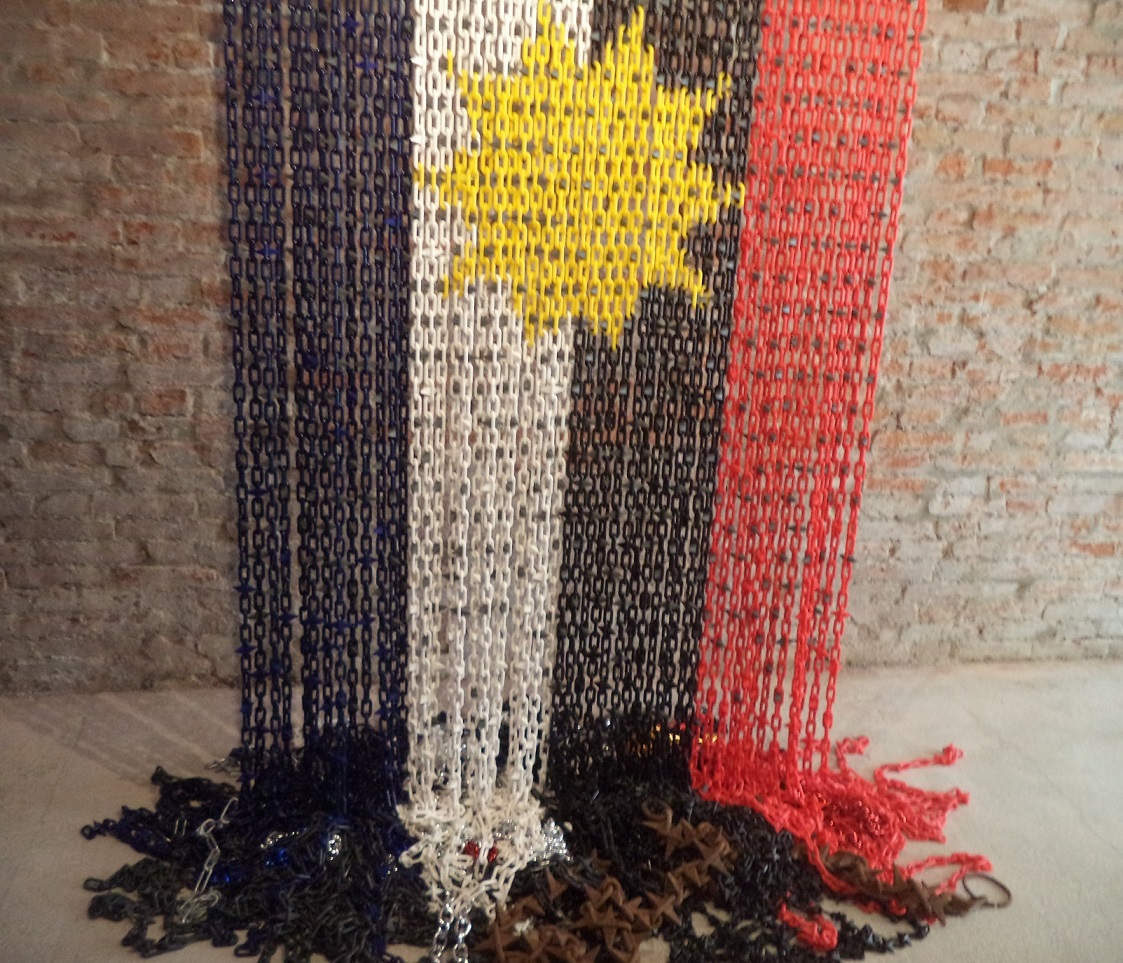
L’installazione di Iv Toshain s’intitola Erewhon, riprendendo un libro di Samuel Butler. La bandiera d’un Paese fittizio è stata assemblata con delle catene chiodate. Così c’è la percezione d’un sadismo perché si punisce per sfruttare, come nel colonialismo. Il “falso sole” in giallo potrà ferire dai suoi raggi per stella da lancio. Le bande al bianco-rosso-nero sembrano quelle balneari d’un ombrellone o d’un lettino. Ma dalla crema rispetto all’abbronzatura si passerebbe a spalmare per ghettizzare: il vecchio colonialismo rinsecchisce nella xenofobia. Non c’è alcuna tendina da sciogliere allo scopo di varcare un confine. La xenofobia respinge l’immigrazione. Il lettino servirà alla visita di controllo, mentre il groviglio in basso, se non fosse ghettizzante, comunque rimarrebbe babelico.
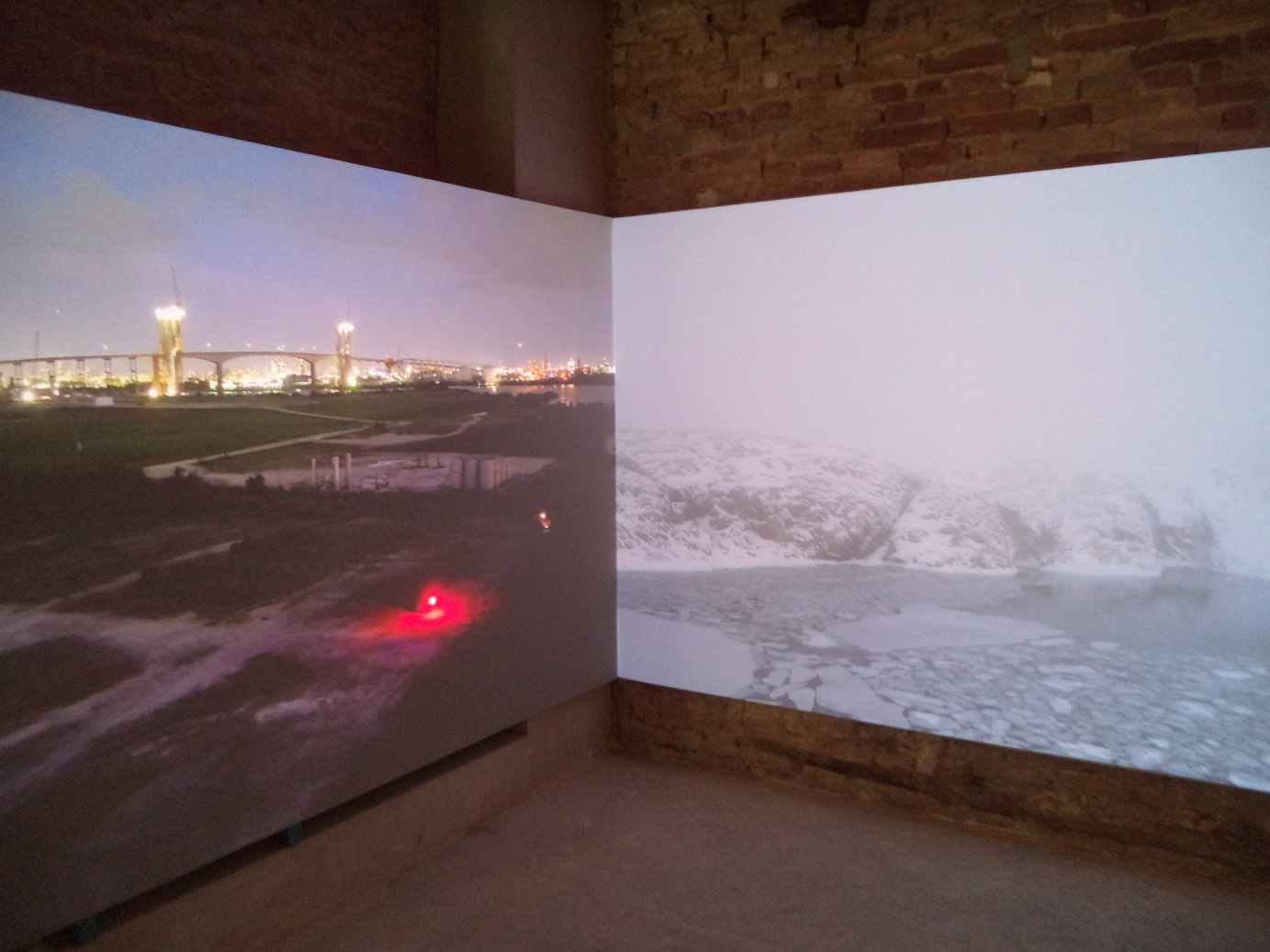
Stefano Cagol porta a Venezia la videoinstallazione dal titolo We are all Nauru. Egli s’è mosso tra la Groenlandia ed il Texas, con l’escursione termica che simbolicamente inerisce allo sfruttamento violento delle risorse naturali. La bomboletta spray degli artisti tramuta in arma incendiaria. Serve un “esorcismo” nei confronti dello sfruttamento. L’opera d’arte riesce nel “miracolo” di risucchiare a dosi l’eternità. Si prenda un monumento: pur avendo le rovine, noi vi gireremmo intorno così da vagheggiarne la ristrutturazione. La bomboletta spray esplode per ammantare “convintamente” i fumi che inquinano “in sordina” mentre lo Stato “chiude un occhio”. L’artista può realizzare la sua performance accanto ai siti industriali. Nell’Artico sono contenute grandi quantità di gas. Il deserto ricco di petrolio si percepisce comunque isolato: non diversamente da un paradiso tropicale. Lo sciamano risucchia a dosi l’eternità: ad esempio per garantire un’intermediazione tra gli spiriti e gli uomini. Oggi il feticismo s’arresta all’incantesimo per il mito. Al divo stesso conviene “buttarsi” sui fan, concedendo il massimo numero di selfie. Esteticamente bisognerebbe evitare il decorativismo! C’è il feticismo liberale del self-made man, esposto a minori antagonismi, contrariamente al vecchio pioniere (se l’artista ha scelto degli ambienti da esplorare). Un saccopelista temporeggia mediante le “pratiche di fortuna”: ad esempio con l’autostop, o con la caccia per lo spiedo. Il suo “successo” si rende più sensibile alla preservazione delle risorse, ed in specie naturali. Egli ammetterà che non sempre può andargli bene. Gli sciamani sono tipici delle terre isolate ma ambite per colonizzarle (in Siberia, nell’Artico, in Africa ecc…).
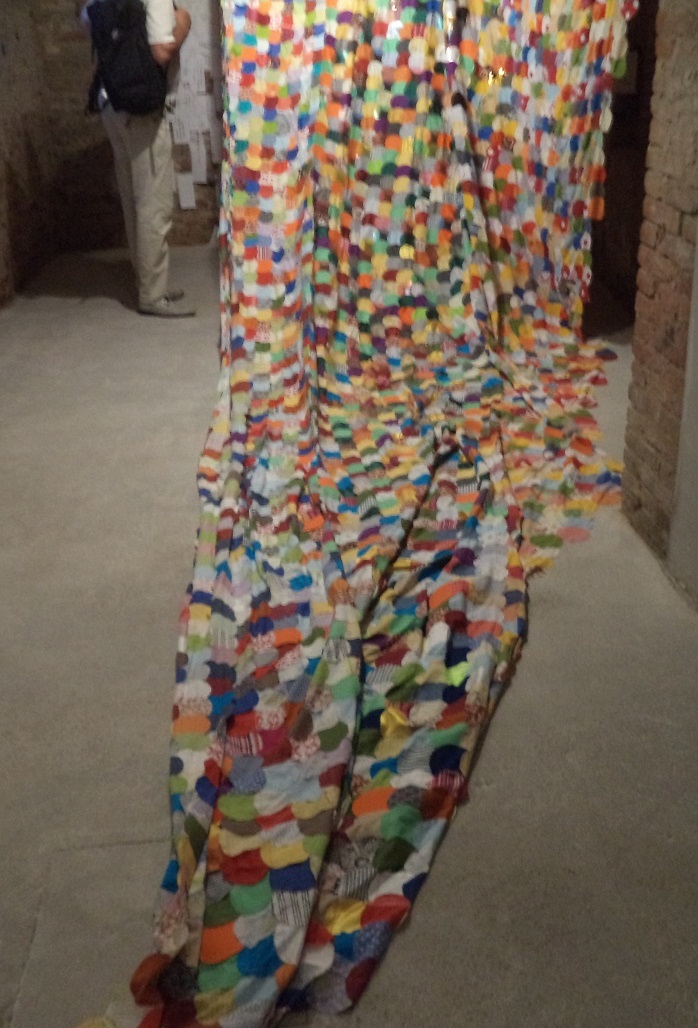
Patricia Jacomella Bonola esibisce l’installazione che s’intitola I used to go to the beach. Appare una vela, che dovrà resistere alle intemperie. Non è banale notare che ciò avvenga tramite il paradosso della leggerezza. Possiamo percepire l’elasticità all’empatia d’una condivisione, ad esempio perché l’aria (dalla volta del cielo) è agognata all’orizzonte dell’acqua marina, dal calore d’una costa abitata in cui approdare. La vela dell’artista ha un “sottosuolo” fatto di tessuti e plastiche, con l’imballaggio che si sintetizza tramite la squama, secondo la forma. Il piccolo pesce abbisogna d’un grande banco mentre nuota, al fine di difendersi. Il cielo guizza con le bolle, mediante l’arcobaleno. Ciò diventa anche un segno di saluto, verso di noi. L’installazione consta di forme a squame assai variopinte, e caldamente leggere. Noi guizziamo con le bolle delle creme, per proteggere la nostra pelle. C’è il fenomeno fisico della luce rifratta, in acqua. Soprattutto, noi immaginiamo il “sole salutante” del francobollo, oltre la “crema” della saliva, spedendo una cartolina ai nostri familiari, amici o colleghi. L’installazione dell’artista è interattiva. I visitatori possono tagliare un foglio di carta, ottenendo un biglietto tramite cui scrivere un messaggio progressista verso Nauru. Qualunque forziere si renderà “caritatevole”, limitandosi alla valigia. Lì si troveranno gli elementi “poveri” della carta, dello spago o della forbice. I biglietti appesi radunandosi ripetono la vela. L’artista ama creare sovrapponendo le cartoline di saluto alle “squame”. La vela fungerà anche da sacco postale.
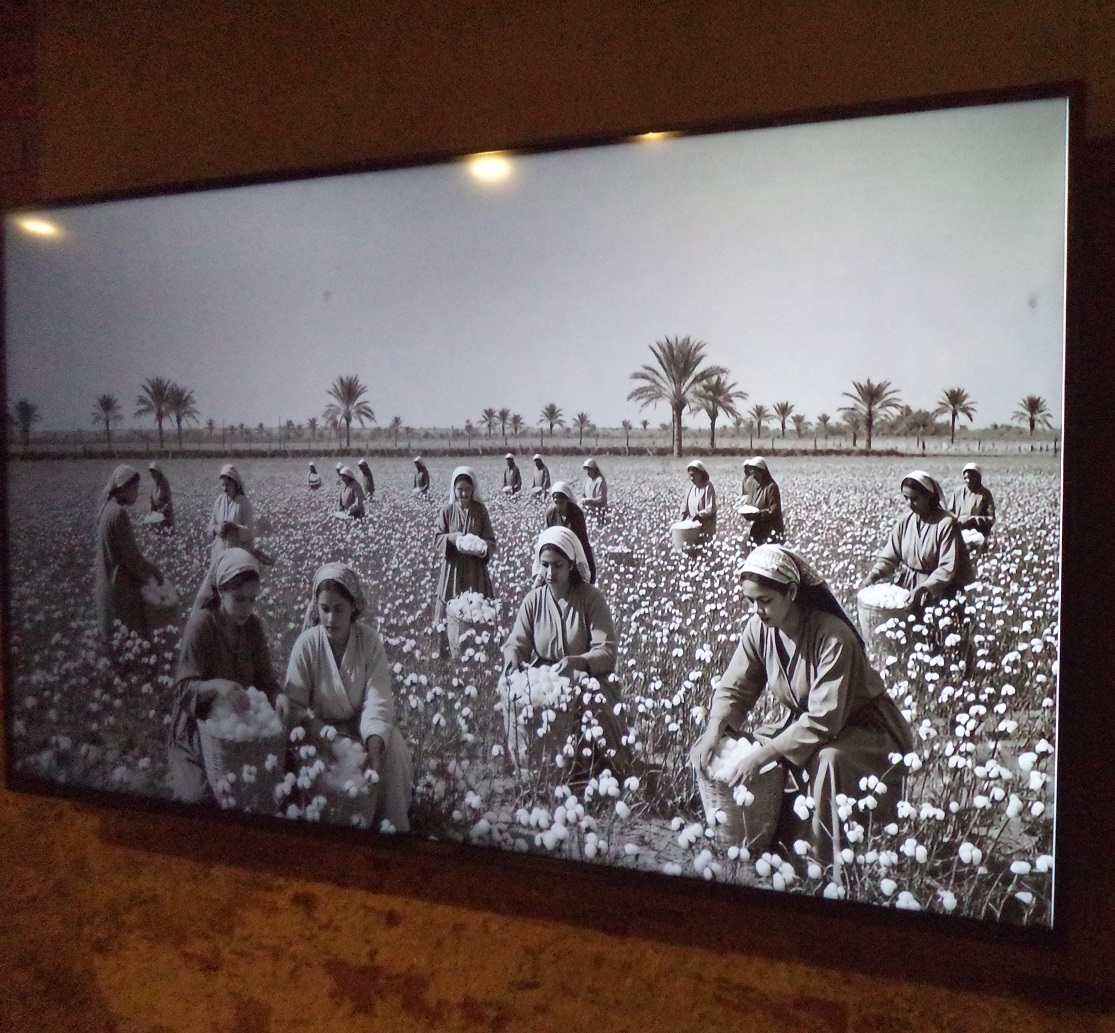
A Venezia, Khaled Hafez ci esibisce una videoinstallazione, dove le immagini ed il suono s’originano col supporto dell’Intelligenza Artificiale. Essa s’intitola Cottonopolis. Si racconta il periodo coloniale dell’Egitto, nella prima metà del Novecento, e dagli “occhi” di Donia, antenata dell’artista. Il cotone coltivato serviva poi ad “ingrassare” la borghesia inglese, con le filature. Donia era uno dei leader nella resistenza separatista. La risoluzione al bianconero ci rimanda più facilmente al passato. C’è la marcia dei soldati che perde la sua retorica della sottomissione, quando il corteo sulle strade dei manifestanti “scompiglia” i cesti per il cotone raccolto, se dal cappello si alzano le bandiere. Il loop della videoinstallazione, da un lato, diventa dialettico con le derive della storia, dall’altro lato. Per esempio in Egitto il colonialismo degli inglesi sparì: ma quanto s’evitò che quello “si camuffasse” paradossalmente nelle cerchie del nazionalismo liberatore? Il Delta del Nilo è il “fiore all’occhiello” per il Canale di Suez, pragmaticamente al contatto fra l’Occidente e l’Oriente (che non “si setaccia” più col “timore” spiritualizzante dell’ignoto, circumnavigando l’Africa). Si rischia però l’ossessione per lo sfruttamento, col capitalismo. Il popolo che lotta contro le ingiustizie rimane pacifico. Oggi si dice che il cotone egiziano sia il più pregiato al mondo. Esso dovrà sostenere perfino come una zattera, lungo il Nilo. Ma quanto esisteranno le “bandiere” delle cateratte? Fra i corsi ed i ricorsi della storia, menzioniamo il “compattamento” delle Primavere Arabe, in diversi Paesi all’inizio del Duemila.
Dorian Batycka è artista e curatore di mostre. A lui interessa l’attualità del rischio che l’Intelligenza Artificiale causi una proliferazione d’immagini e contenuti in base ad algoritmi non attendibili, per finalità commerciali o politiche. Alcuni microstati dell’Oceania suscitano la simpatia per gli strani domini in informatica, che diventano addirittura una fonte di guadagno. C’è il progetto che l’artista, interpellato in favore di Nauru, chiama #disappear. I cavi si sbroglieranno per demistificazione, così da sostenersi sulla spontaneità delle liane.
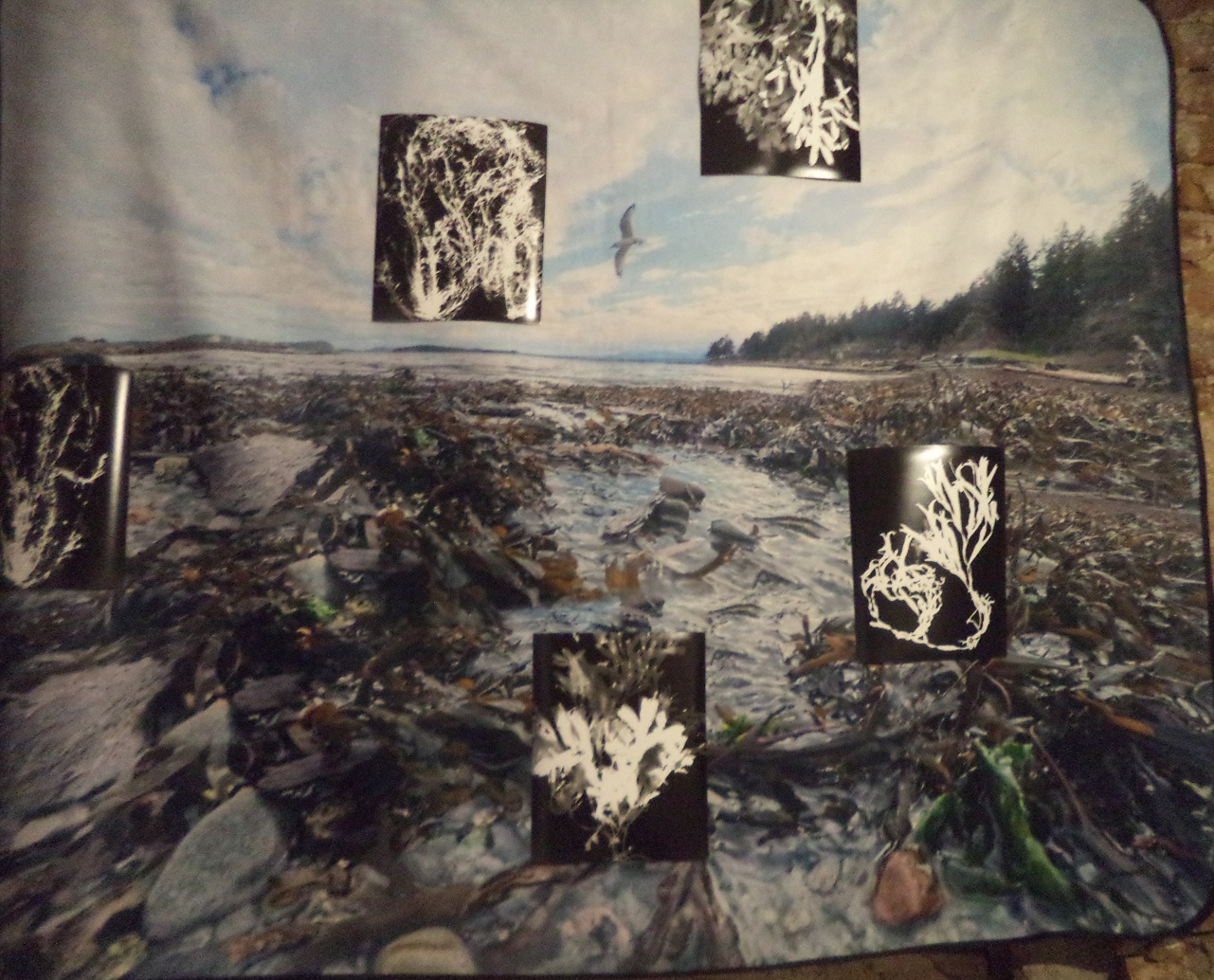
A Venezia, Sylvia Grace Borda espone l’opera d’arte dal titolo Shoreline debris, con i fotogrammi stampati sulla carta argentata. Lei è partita dai detriti di alcune alghe, portati a riva da una flora in decomposizione. Su questo processo, incide l’anormale riscaldamento del clima. L’artista menziona l’Oceano Pacifico. In un ecosistema sano le alghe ospitano i granchi ed i molluschi, contribuendo al ciclo dell’ossigeno ed al rallentamento dell’erosione costiera a causa delle correnti. Esteticamente i detriti recuperano quantomeno una silhouette, dopo l’esposizione per fotosensibilità. La tessera serve al riconoscimento, nelle pratiche amministrative. Ma quella è spartana, ad esempio perché non “si decora” con l’outfit. Per l’artista, il fotogramma si percepirebbe quasi galleggiando come l’olio sull’acqua (complice una videoinstallazione, che s’intitola Intertidal cantos): centra il fondale nero. Eventualmente, la secca dolcezza delle tamerici ascenderebbe in Paradiso… Il fotogramma si percepirà come angelico. Secondo l’ecologismo, lo sfruttamento del petrolio mediante le trivelle non dà nuove energie per vivere. I raggi X certificheranno una malattia. La natura è innocente, se noi la “sporchiamo” o peggio la violentiamo.
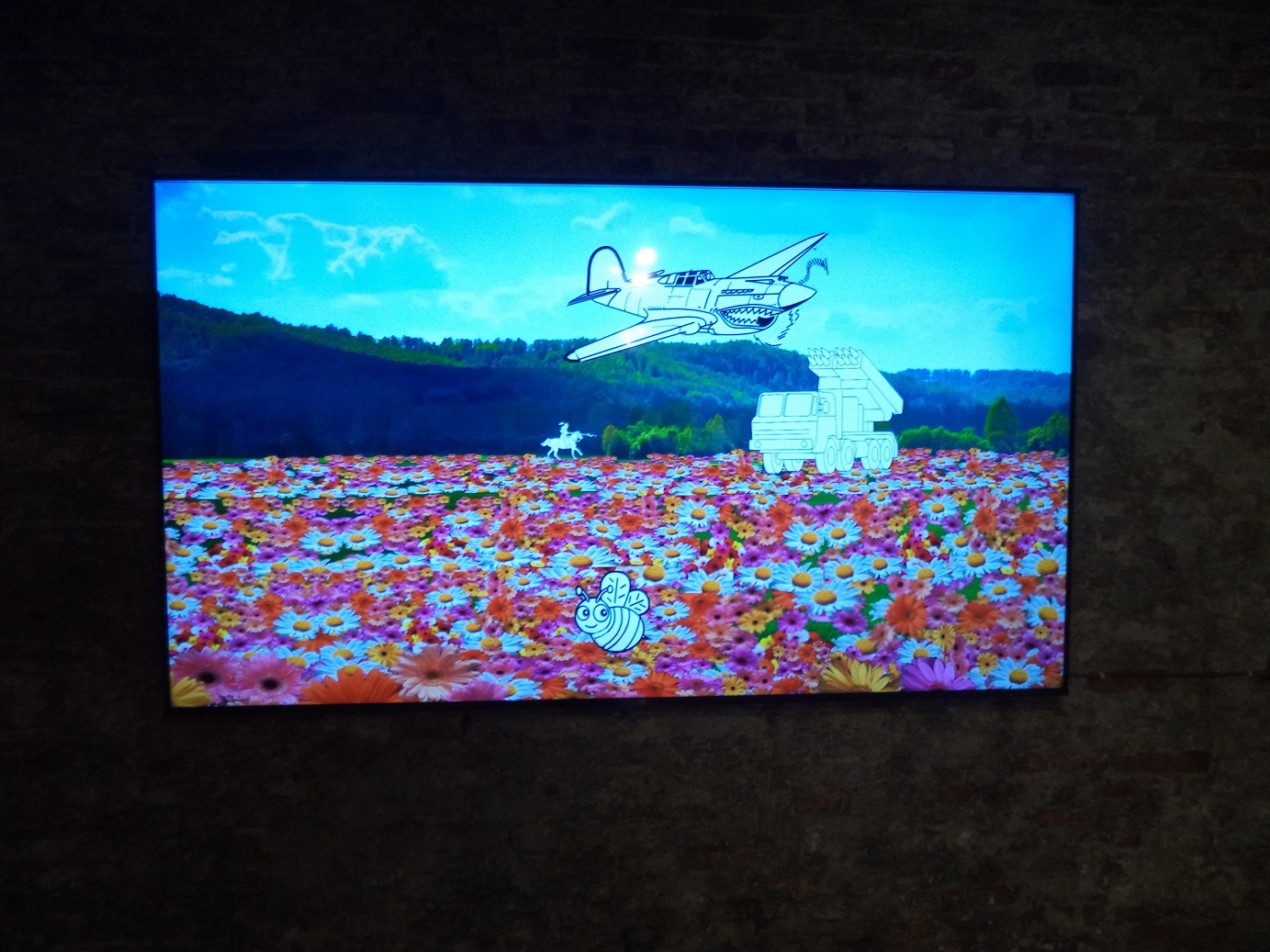
Esteticamente, l’allestimento di Ron Laboray medita in modo multisensoriale intorno all’instabilità dei valori. Il titolo è Disappearance as perceptual inquiry. I valori sovente sono battuti da paradigmi estemporanei per il mero interesse dei gruppi al potere. All’artista non resta altro che divagare al surrealismo del pop, con leggerezza. Così i teli ricorrono alla plastica per lucidare alcuni miti solo vagheggiabili: una sirena medievale (per la magia di conoscere il destino), il fiore nazionale di Nauru (quando la fragranza illude sull’eternità, anche per esotismo), la copertina dell’album The dark side of the moon dei Pink Floyd (se la musica è un linguaggio universale). Tuttavia bisogna evitare che la cultura occidentale si renda egemonica. Non si calpesteranno più i fiori: per esempio mediante alcune suole pericolosamente tramutabili in bombardieri. Una mitologica sirena si naturalizza nel polpo: entrambi intercettano per sfuggire. La videoinstallazione ci mostra una dialettica tra l’ape e l’aereo militare, mentre dal campo di fiori fittissimi emerge la “cupola” d’un elmetto. Nella Seconda Guerra Mondiale, le battaglie sul fronte dell’Oceano Pacifico furono famose. Oltre l’ape rispetto al bombardiere, potrebbe comparire l’UFO. Con questo avremmo un emblema della conoscenza che si tiene nascosta, per motivi più o meno “cristallini”, politicamente. Il soldato non dovrebbe sparare in mezzo ai fiori: sarebbe empio, rispetto all’ideale d’un Paradiso. L’aereo per la disinfestazione dà i danni collaterali, mediante i pesticidi: per le api o gli uccelli. Volendo vivere in pace, le persone si divertono a fantasticare, in un “altro mondo”. Ricordiamo la controcultura dai figli dei fiori.
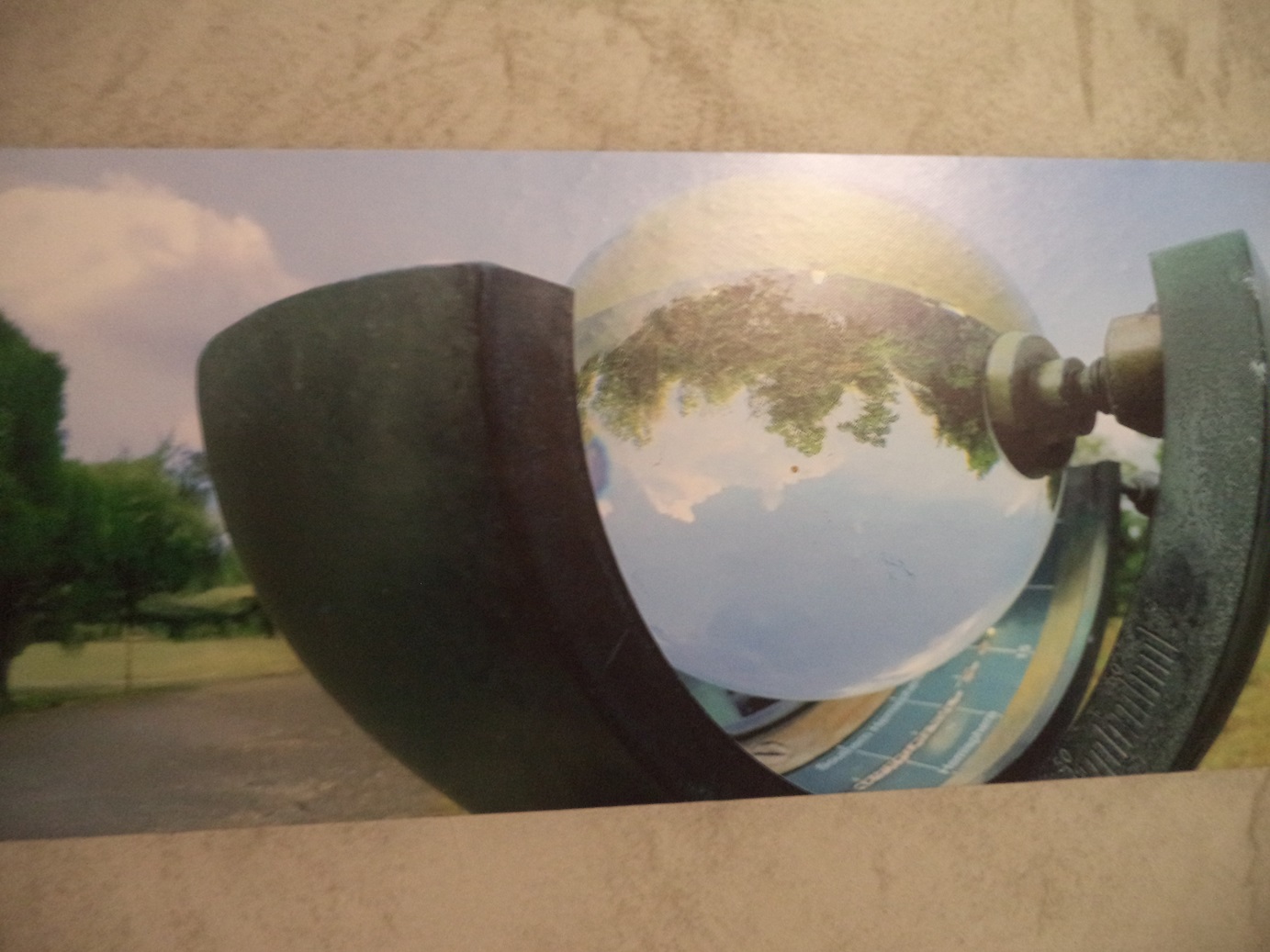
Kauw Tsitsi è nativo di Nauru; egli fa l’artista, il musicista ed il poeta. Per Venezia, il suo progetto si chiama Trapped. Esteticamente, interessano i cambiamenti avvenuti nella società civile di Nauru. Anzi è importante ricordare che l’isola ricevette i primi colonizzatori circa 3000 anni fa. Ne derivò un governo tribale. Modernamente la prospettiva s’invertì, giacché gli abitanti di Nauru subirono il colonialismo straniero sull’industria estrattiva. Liricamente, Kauw Tsitsi si lamenta con la politica. Dunque le generazioni nacquero dando in prestito la polvere, mentre il suolo sabbioso dell’isola si ridusse ad un numero impresso sull’acciaio. E’ stata esposta l’immagine per un’installazione dove un mappamondo pencola, come una bussola od un sestante (ricordando la peculiarità descrittiva nella bandiera di Nauru). Esistono le “cattive influenze” da parte del capitalismo, poi pragmatico con la pubblicità. Per Kauw Tsitsi, gli abitanti di Nauru rimangono intrappolati fra il mare ed il cielo, o tra le verità dimenticate e le bugie edulcorate. C’entra anche l’isolamento del paradisiaco. Per un reporter occidentale, è difficile portare le istanze progressiste di Nauru all’attenzione del mondo. Il dondolio non apparterebbe solo allo scafo d’una nave, se questa volasse in mezzo alle stelle: per prevedere il futuro. Gli scienziati già sanno con certezza che gli oceani si stanno pericolosamente alzando.
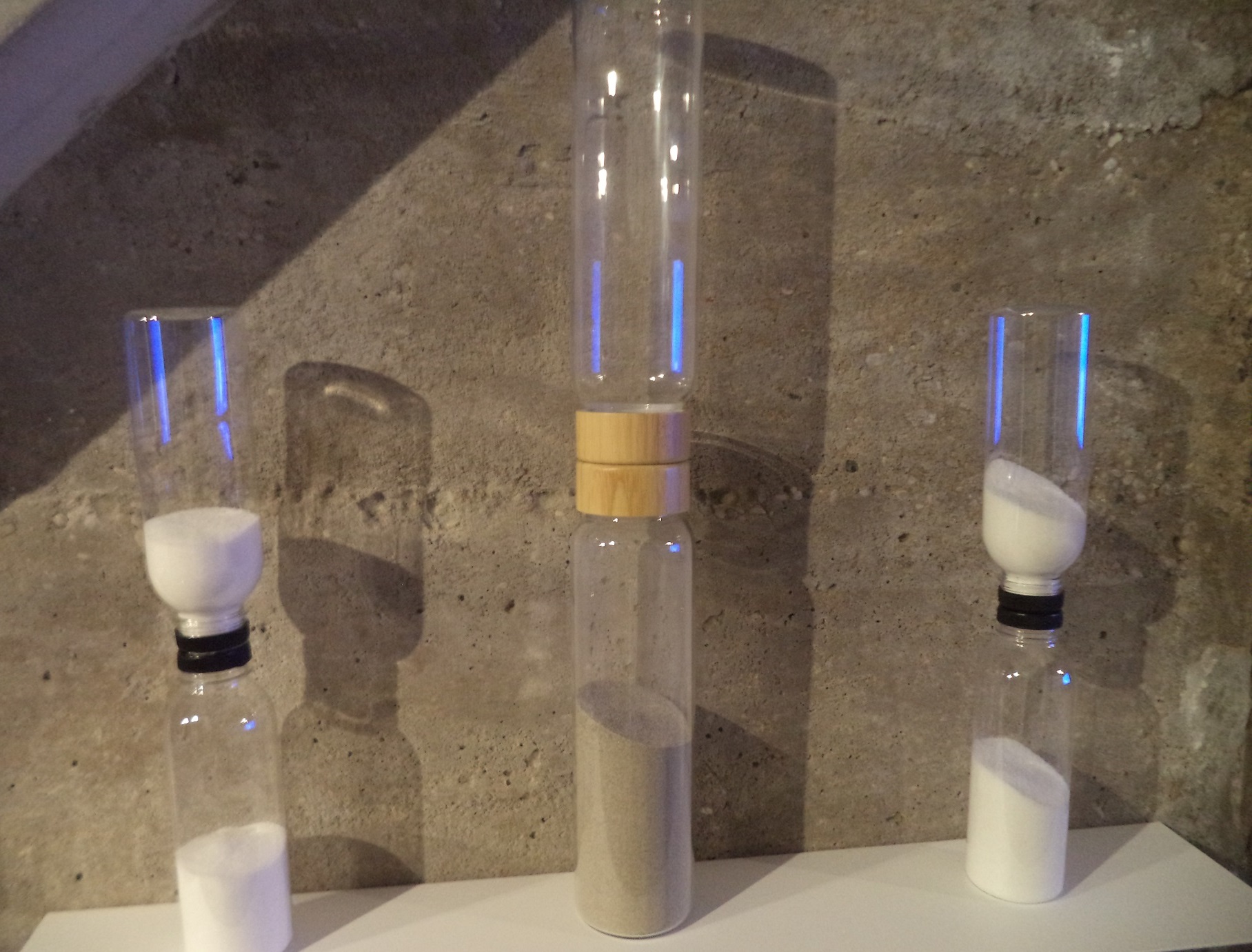
Khaled Ramadan ed Alfredo Cramerotti (che si firmano come CPS) ci sensibilizzano sull’instabilità ambientale. Per Venezia, è stata portata una scultura. Questa appartiene al progetto che s’intitola Contested ecologies. Ci sono le clessidre, sopra una mensola che conferma la modularità. Si rievoca Nauru dalla sabbia bianchissima, e dalla canna di bambù per il tappo. Nel complesso predomina la percezione dell’ostruzione. I tappi raddoppiano, senza una necessità per il funzionamento. Alla fine immaginiamo il verricello, in qualità di precursore per la trivella. La sigla di firma artistica CPS sta per Chamber of public secrets, mentre è accattivante aprire una bottiglia lanciata in mare, subendo a caso le onde, col messaggio da leggere.
IN NAURU WE USE THE EXTRACTIVE SEXTANT FOR THE EDEN WHICH SWAYS
In Venice, for the Art Biennale 2026, we can visit for the first time the Nauru Pavilion, with the collective works from authors born in different countries: Kauw Tsitsi, CPS (Khaled Ramadan and Alfredo Cramerotti), Patricia Jacomella Bonola, Tedo Rekhviashvili, Sylvia Grace Borda, Ron Laboray, Dorian Batycka, Khaled Hafez, Iv Toshain, Stefano Cagol. The location is at the Spazio Castello 3683. The title of the exhibition is Aim inundated: imagining life after land. One of the artists, Khaled Ramadan, made the curatorship. First of all we have to remember that Nauru is the smallest insular State in the world. So the climatic upheavals of the contemporary age would really touch the “sensitivity” of the residents (if the shallow “defensiveness” for an underestimation of the kind of < How could this happen exactly to me >, which in the West blocks the governments in many but useless meetings due to a “short-sightedness”, is lacking). Nauru knew a story of internal “pressures”, about the extraction of the phosphate needy of being speeded up. But people did not fear the risk of a depletion. Today the dialectics between the consumerism and the environmentalism remains. There is the inescapable raising of the oceans, while the extractive industry plans a redevelopment from the phosphates to the manganese, on the seabeds which have a biodiversity deserving of a preservation. Venice lives in a similar paradox, between the sluice gates of the MOSE and the Petroleum Canal. The Nauru’s flag indicates the position of the island compared to the equator line. However we can not colonize a star. The mankind will have to clean the Earth against the pollution. History certifies for us that even the exoticism avoided the colonialism, unfortunately. In Nauru the percentage of immigrants is high; they virtually “will lift” a false atoll, because of their gathering as reception, at the softness for a magnet. The isolation makes progress through the chorality. We remember the motto with a chiasmus of Alexandre Dumas which encourages the < all for one and one for all >. Nauru does not have the archipelago. So the support to supranational organization becomes more spontaneous, to correct the criticalities which belong to everybody. For example the plastic consumption in the world is concentrated in a false continent, which floats on the Pacific Ocean. The phosphate is used to cleanse, although in Nauru the nature lets very white beaches; the manganese is used for the batteries, with the isolation of Nauru which needs a minimum of connections, as from the tourism.
In Venice, Tedo Rekhviashvili installed the sculpture called Sea that remembers. A shell is revisited, getting it bigger. That is the same picked up by the artist as a child, on the shore of the Black Sea, in Abkhazia, getting it close to the ear to listen the noise of the waves. However the symbology of a protective shield follows. Russia occupied Abkhazia, after a war against Georgia, where the artist is citizen for nationality. So the ear could resound dangerously in traumatic way, from the shots. But how will we perceive symbolically a reappropriation of the lost land, by the artist? A heart for an iceberg will be represented. The verdant grass would have put the pulsations of the light back to the dark abysses with the algae. There is the big cloud at the horizon to try a boiling point for the ice. In Abkhazia we can visit the shortest river in the world (Reprua) and the deepest cave in the world (Krubera). If the soul was immortal, from the heart, so the feelings would be the veins of a shell, because we perceive the hearing as the sense appropriate to reach the intimacy, being equal the abstraction. A cave becomes an iceberg for a crevasse. But will a speleologist be able, climbing down, to “fan” a “shell” of the rock? The Caucasus range would have even the “chelae” of the Black Sea and the Caspian Sea. According to Mircea Oprea, if we see the rainbow in the sky, we will try to cut it with the scissors, inaugurating a heaven on earth. A society does not colonize the air. But the spirituality is able to cleave the flight.
The installation of Iv Toshain is called Erewhon, recalling a book of Samuel Butler. The flag of a fake country was assembled with the spiked chains. So there is the perception of a sadism, because the punishment wants to exploit, like in the colonialism. The “fake sun” in yellow could wound from its rays for a throwing star. The stripes in white-red-black seem the same of a beach umbrella or of a sunbed. But from a cream compared to a tan we would pass to a spreading to ghettoize: the old colonialism dries out in the xenophobia. There is no little curtain that we have to untie in order to cross a border. The xenophobia rejects the immigration. The sunbed will serve during a follow-up visit, while the tangle below, even if it was not for a ghettoization, however would remain babelic.
Stefano Cagol brings in Venice the videoinstallation called We are all Nauru. He moved between Greenland and Texas, with the thermal excursion which symbolically is inherent in the violent exploitation of the natural resources. The spray can of the artists changes in incendiary weapon. An exorcism towards the exploitation is necessary. The art work is able “miraculously” to suck in, at doses, the eternity. We can consider a monument: although it is in ruins, we will turn around it so to dream of its restoration. The spray can explode to cloak “staunchly” the smokes that pollute “stealthily” while the State “turns a blind eye”. The artist can realize his performance next to the industrial sites. In the Arctic large amounts of gas are contained. A desert full of petroleum is perceived however isolated: not unlike a tropical heaven. A shaman sucks in, at doses, the eternity: for example to guarantee an intermediation between the spirits and the men. Today the fetishism is stopped at an enchantment for the myth. It is recommended also to the celebrity to “dive” into his fans, allowing them to take the maximum number of selfies. Aesthetically we should avoid the decorativism! There is the liberal fetishism of the self-made man, which is exposed to a reduced number of antagonism, in contrast to the old pioneer (if the artist chose the environments for their exploration). A backpacker stalls through the “jerry-rigging solutions”: for example with the hitchhiking, or with the hunting for a spit-roasting. His “success” becomes more sensitive to the preservation of the resources, especially natural. He will acknowledge that things won’t always go his way. The shamans are typical of the lands isolated but desirable for their colonization (in Siberia, in the Arctic, in Africa etc…).
Patricia Jacomella Bonola shows the installation called I used to go to the beach. A sail appears; it will have to withstand the bad weather. It is not banal to notice that this situation happens through the paradox of the lightness. We can perceive the elasticity at the empathy of a sharing, for example because the air (from the vault of the sky) is yearned at the horizon of the sea water, from the warmth of a coast with inhabitants where we have to make landfall. The sail of the artist has a “subsoil” made of wovens and plastics, with the packaging that is synthesized through the scale, according to the shape. The little fish, while it swims, needs a big group to protect itself. The sky darts with the bubbles, through a rainbow. This becomes also a gesture of greeting, into us. The installation consists of shapes with scales very multi-coloured, and warmly light. We dart with the bubbles of the creams, to protect our skin. There is the physical phenomenon of the light in refraction, in the water. Principally, we imagine the “sun which greets” in a stamp, beyond the “cream” of the saliva, sending a postcard to our relatives, friends or colleagues. The installation of the artist is interactive. The visitors can cut a sheet of paper, obtaining a note through which they write a progressive message about Nauru. Whatever treasure chest will become “charitable”, being limited to the suitcase. There we will find the “poor” elements of the paper, the twine and the scissors. The hung notes in their gathering repeat the sail. The artist loves to create overlapping the greetings from postcards with the “scales”. The sail will function also as postal sack.
In Venice, Khaled Hafez shows for us a videoinstallation, where the images and the sound are originated by the support of the Artificial Intelligence. It is called Cottonopolis. There is the tale of the colonial age in Egypt, in the first half of ‘900, and from the “eyes” of Donia, a forefather of the artist. The cultivated cotton then served to “enrich” the English bourgeoisie, with the spinning. Donia was one of the leaders in the separatist resistance. The resolution in black and white refers us more easily to the past. There is the march of the soldiers which loses its rhetoric about a submission, when a parade to the streets with the demonstrators “tousles” the baskets for the cotton gathered, if from the hat the flags are raised. The loop of the videoinstallation, on the one hand, becomes dialectical with the derivations of the history, on the other hand. For example in Egypt the colonialism of English men disappeared: but how much would the Egyptian men have avoided its “camouflage” paradoxically in the entourages of the liberator nationalism? The Nile Delta is the “jewel in the crown” for the Suez Canal, pragmatically to a contact between the East and the West (which is no longer “sifted” being afraid spiritually of the unknown, as in a circumnavigation of Africa). However there is the risk of an obsession for the exploitation, with the capitalism. A population that fights against the injustices remains peaceful. Today we say that the Egyptian cotton is the most precious in the world. It will have to support even like a raft, along the Nile. But how much will the “flags” of the sluice gates exist? Between the occurrences and the recurrences of the history, we mention a “compaction” in the Arab Spring, due to the different countries at the beginning of twenty-first century.
Dorian Batycka is artist and curator of exhibitions. He is interested in the risk that Artificial Intelligence causes a proliferation of images and contents on the basis of algorithms without reliability, for commercial or political purposes. Some microstates in Oceania evoke sympathy for the strange domains in computer science, which even become a source of revenue. There is a project that Dorian Batycka, consulted in favour of Nauru, calls #disappear. The cables will be disentangled for a demystification, so for their support on the spontaneity of the lianas.
In Venice, Sylvia Grace Borda exposes the art work called Shoreline debris, with the frames printed on the silver paper. She started from the debris of some algae, arrived onshore from a rotting flora. An abnormal climate warming affects that process. The artist mentions the Pacific Ocean. Inside a healthy ecosystem the algae host the crabs and the molluscs, contributing to the cycle of the oxygen and to a slowdown of the coast erosion because of the currents. Aesthetically the debris recover at least a silhouette, after the exposition for a photosensitivity. A card serves to an identification, in the administrative procedures. But that one is spartan, for example because it is not “decorated” by an outfit. According to the artist, the frame would be perceived almost floating like the oil on the water (with the complicity of a videoinstallation, that is called Intertidal cantos): a black backcloth is important. Potentially, the dry sweetness of the tamarisks would ascend to Heaven… The frame will be perceived as angelic. According to the environmentalism, the exploitation of the petroleum through the drillers does not give new energies to live. The X-rays will certify an illness. The nature is innocent, if we “dirty” it or worse we violate it.
Aesthetically, the setting-up of Ron Laboray reflects in multisensory way on the instability of the values. The title is Disappearance as perceptual inquiry. The values often are defeated by the extemporaneous paradigms for the mere interest of the groups of power. For the artist, the only option is to wander at the surrealism for the pop, lightheartedly. So the sheets resort to the plastic to polish some myths only for a pleasurable contemplation: a medieval siren (for the magic of knowing the destiny), the national flower of Nauru (when the fragrance deceives about the eternity, also for the exoticism), the cover of the album The dark side of the moon from Pink Floyd (if the music is a universal language). However we have to avoid that the Occidental culture becomes hegemonic. We won’t tread again on the flowers: for example through some soles dangerously changeable in bombers. A mythological siren is naturalized by an octopus: both of them intercept to slip away. The videoinstallation shows us the dialectics between the bee and the military aircraft, while from a field of very thick flowers a “dome” of the helmet emerges. In the Second Mondial War, the battles on the Pacific front were famous. Beyond the bee compared to the bomber, a UFO could appear. Through this, we would have an emblem of the knowing that we hide, for reasons more or less “immaculate”, politically. The soldier should not shoot between the flowers: that would be blasphemous, compared to the ideal of Heaven. The aircraft for the disinfestation gives the collateral damages, through the pesticides: for the bees or the birds. If the people want to live in peace, so the people have fun daydreaming, in “another world”. We remember the counterculture from the “flower children”.
Kauw Tsitsi was born in Nauru; he is artist, musician and poet. For Venice, his project is called Trapped. Aesthetically, there is an interest for the changes happened in the civil society of Nauru. Rather it is important to remember that the island received the first colonizers circa three thousand years ago. Consequently a tribal government was born. In the modern age the prospect was inverted, because the Nauru’s inhabitants were subjected to a foreign colonialism about the extractive industry. Lyrically, Kauw Tsitsi complains to the politics. Therefore the generations were born lending the dust, while the sandy ground of the island was reduced to a number impressed on the steel. The image for an installation where a globe sways, like the compass or the sextant (remembering the descriptive peculiarity in the Nauru’s flag), was exposed. The “bad influences” by the capitalism, then with the pragmatism of the advertisement, exist. According to Kauw Tsitsi, the Nauru’s inhabitants remain trapped between the sea and the sky, or between the forgotten truths and the sweetened lies. Also the isolation of a paradisiacal environment counts. For a Western reporter, it is difficult to popularize the progressive requests of Nauru to the attention of the world. The rocking movement would not belong only to the hull of a ship, if this one flew between the stars: to predict the future. The scientists already know for sure that the oceans are dangerously going to rise.
Khaled Ramadan and Alfredo Cramerotti (who sign themselves as CPS) raise awareness for us about the environmental instability. For Venice, a sculpture was brought. This one belongs to a project that is called Contested ecologies. There are the hourglasses, over a shelf which confirms the modularity. Nauru is revoked by the very white sand, and by the bamboo cane for the cap. Overall the perception of an obstruction predominates. The caps double, without a necessity for the functioning. Finally we imagine the hoist, like a precursor for the drill. The initials CPS for an artistic signature concerns a Chamber of public secrets, while the opening of a bottle, thrown into the sea, being casually subjected to the waves, with a message that we have to read, is captivating.

Paolo Meneghetti

Be First to Comment