
Per la Biennale di Venezia 2026, si può visitare dal 9 Maggio al 22 Novembre il Padiglione Nazionale dell’Islanda, e presso il Docks Cantieri Cucchini. Vi espone l’artista Asta Fanney Sigurdardottir, che è pure poetessa. Esteticamente, a lei interessa che arredando un cantiere navale, l’isolamento abbia un portale sull’immaginario. Il galleggiante ci salverà grazie ad un talismano… Ai Cantieri Cucchini, nell’Isola di San Pietro la cui basilica avviò il Patriarcato di Venezia, Asta Fanney Sigurdardottir ha allestito le pareti ed i tappeti col blu marino. Le luci si percepirebbero soffuse poiché rimaste ad una trasfigurazione della terra. Si conosce il vulcanesimo islandese. Dunque il galleggiamento della lava rilascerà una perla per il sole. I raggi vivificheranno una “tettonica degli schemi”, per le delimitazioni sull’immaginario. Ma quanto ogni messaggio sarà cifrato? Il lirismo dissolve il concettualismo. C’è il trono schematico della sedia che stabilizza, mentre la vetta del vulcano aprirebbe il cono verso un portale, tramite cui sorvolare. Gli spruzzi delle onde ricadranno dalle stelline ispiranti. Una costa frastagliata è pur sempre magmatica da percepire. Essa si farà cavalcare da un Mago Merlino tanto solitario come l’orso quanto docile come la pecora. L’allestimento ha una vena fantasmagorica.
A Venezia la mostra di Asta Fanney Sigurdardottir s’intitola Pocket universe. Si cerca l’epistemologia che esteticamente focalizza lo schematismo. Il tono del blu si percepisce sempre al rilassamento per immersione. Gli orsi polari in Islanda arrivano accidentalmente, perdendosi sui blocchi di ghiaccio che si staccano dall’Artico. Si tratterebbe d’un rilassamento da trasporto paradossalmente teso ad una risistemazione. In Islanda ci stanno più pecore che cittadini. La lana va imbottita, contro il gelo. Ma ci saranno gli “strappi” della tettonica, fra l’Eurasia e l’America Settentrionale. Per gli uomini, la “boa” d’una voce improvvisa lamenterebbe la perdita d’un orientamento: già in se stessa, tentando d’appigliarsi all’udito (alla comunanza dell’astrazione percettiva). In Islanda virtualmente neppure esisterebbero i confini, perché la faglia interna appartiene ai continenti, col loro multiculturalismo. La cucitura sarà affrontata dai valori orizzontali, in sociologia, relativamente agli affetti personali: con l’amicizia, la generosità, l’amore ecc… Il cantiere navale capovolgerà l’esca d’una risacca che stressa, alla quotidianità monotona. Si salpa sempre verso la novità, se non verso l’imprevedibilità! Ci piace immaginare l’Islanda come al balcone panoramico per un lungo ponte che unisca l’Eurasia all’America Settentrionale. Quindi le colonne fermeranno le lancette del tempo, nel quadrante per l’orologio. Le rocce basaltiche ad esagono tamponerebbero con la loro eccezionalità la naturalezza dell’erosione.
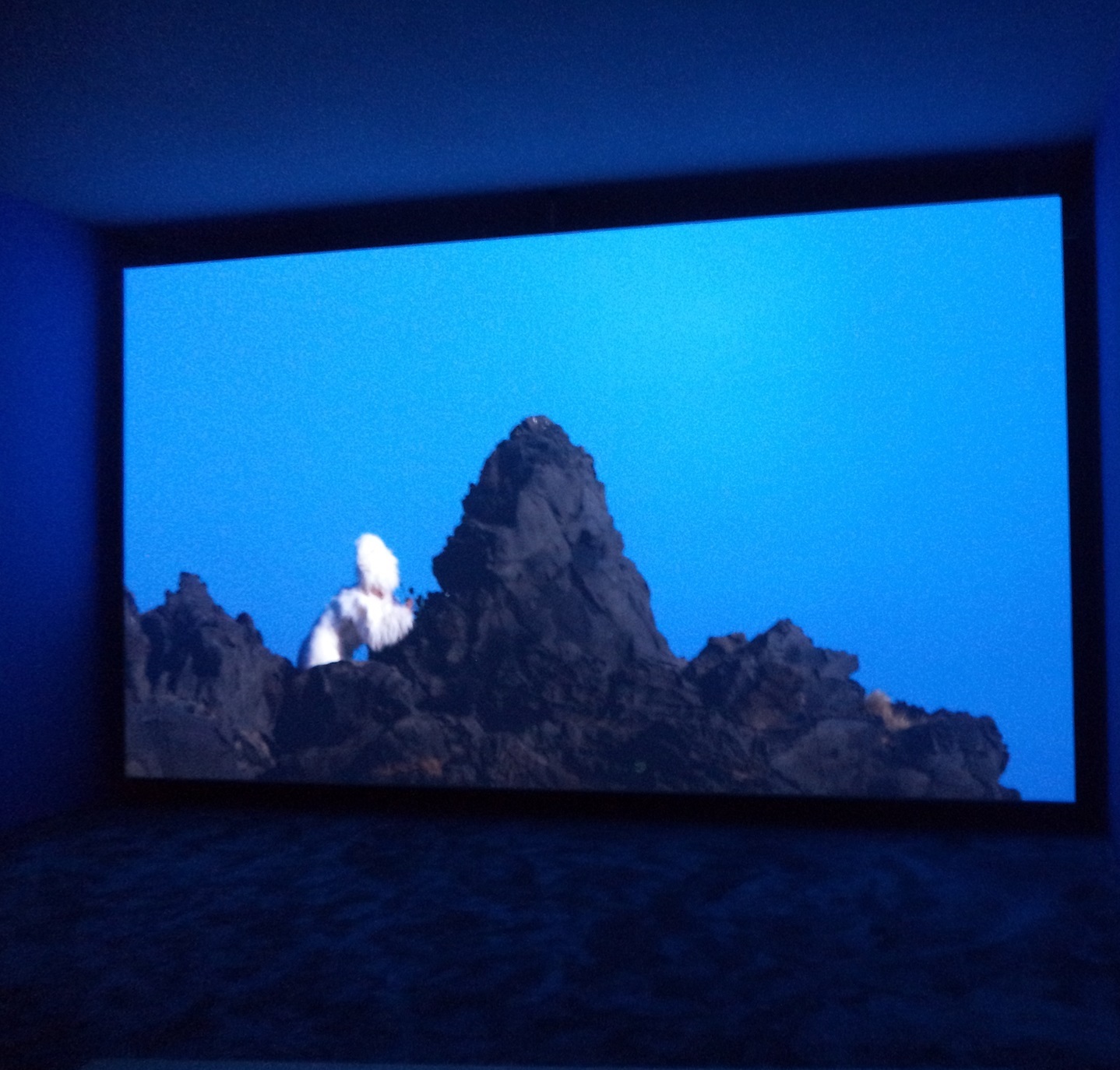
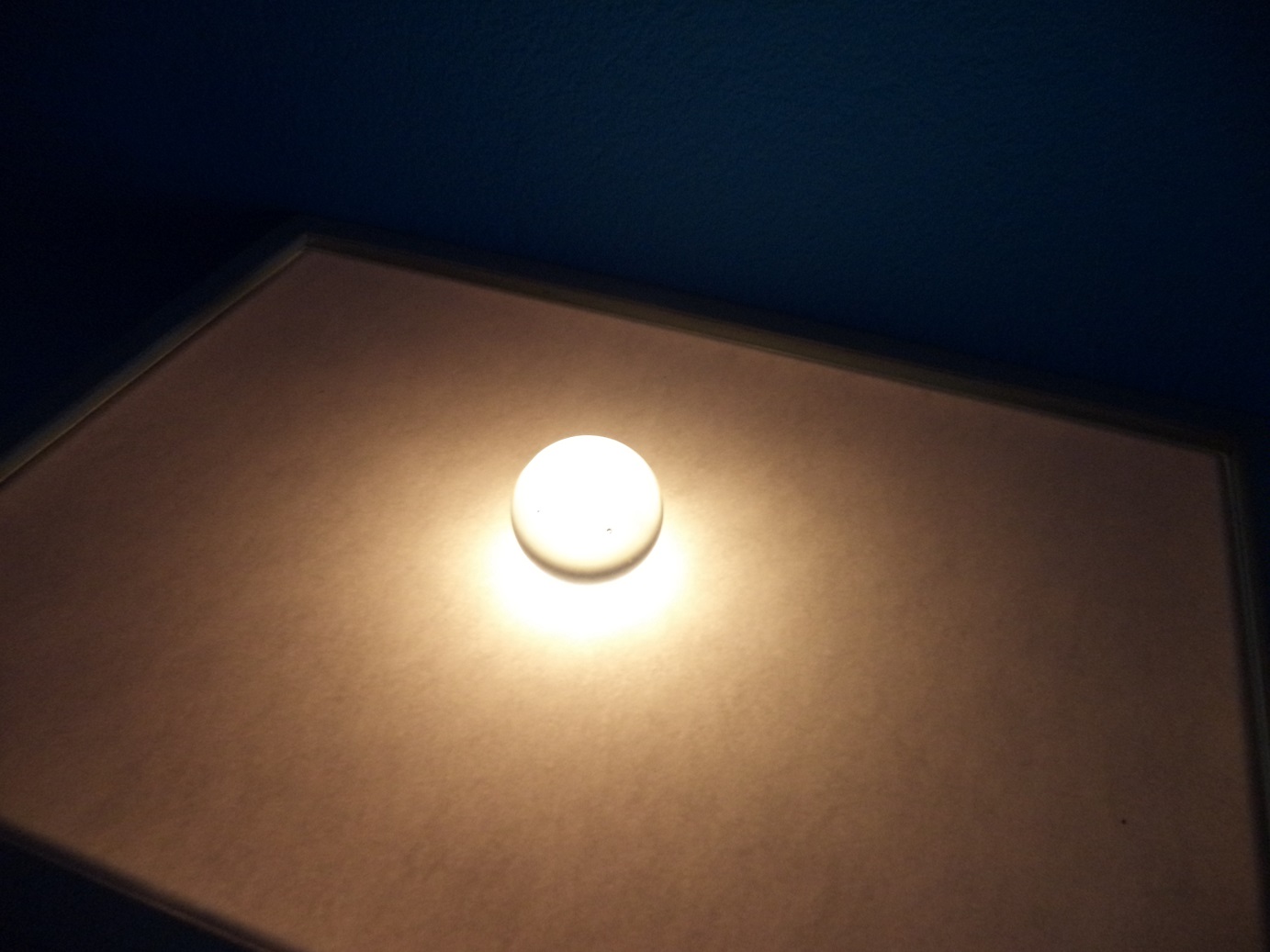
Specificatamente, il “mago” sul portale dell’immaginario che Asta Fanney Sigurdardottir invoca si chiama Creature Zero. Per il suo abito, ai peli di neve, c’è stato l’aiuto della designer Sol Hansdottir. Dalla video-installazione, noi seguiamo la storia d’una ricerca geologica. Il Creature Zero compie quasi un giro della Terra, dall’Islanda al Giappone. Esteticamente si cita il network del fluxus. Ad Asta Fanney Sigurdardottir preme di recuperare una pietra filosofale, capace di catalizzare in sé l’origine della Terra, purificando la storia delle sue corruzioni. Presumibilmente, occorrerà scavare. L’artista esibisce la miniatura d’un nucleo terrestre, tramite la sfera con la sorgente di luce, che “erutterà” allo strappo d’un cordino, rispetto alla “trottola” del tempo eternizzante (se il presente è tale perché posticipa il passato, ed anticipa il futuro). Alla fine si rivelerà la stratificazione d’un messaggio, che la poesia avrà decifrato. Se l’albero genealogico si disperde, quantomeno il talismano romanticizza il metal detector. L’artista è ispirato da precise fonti. L’ermetismo dell’isola indirizza il naufrago; per la sua miniatura, può valere la bussola. L’amuleto ha un’energia perché gliela diamo noi, attraverso una mitologia. In specie esso serve a fermare il tempo, si spera favorevolmente. In Islanda l’energia dei vulcani si sprigiona nell’ambiguità delle placche continentali. Ma quanto il Creature Zero avrà un tessuto di peli ad aghi? In Islanda c’è una diffusa mitologia riguardo agli elfi, saltellanti al ponte fra le fessure delle rocce. Loro s’orientano meglio, rispetto alle aspirazioni degli uomini, se i saliscendi per i prati rimangono desolati. Il Creature Zero slancerà con un pizzico di magia la coda corta della pecora. Parallelamente, la bussola servirà perfino a convogliare le correnti marine, oltre l’allarme dalla boa, contro lo smarrimento. Asta Fanney Sigurdardottir tratta l’immaginario con l’ottimismo, se non per il progressismo. All’inizio il suo spostamento in un’isola giapponese fu tortuoso. Ma agli artisti l’improvvisazione può piacere, se l’opera rimane un cantiere aperto per reinterpretarla. Asta Fanney Sigurdardottir ha appreso in Giappone la leggenda per cui, osservando in cielo un raduno d’uccelli, addirittura si nasconderebbe una divinità. L’ornitomanzia è praticata in molte culture. Gli uccelli hanno la peculiarità di evocare i dinosauri. Essi mantengono nel corpo una temperatura assai calda. Nella mitologia giapponese, la divinità avrebbe creato le terre emerse rimestando l’oceano con una spada ingioiellata. La goccia si sarebbe evoluta nella pietra.
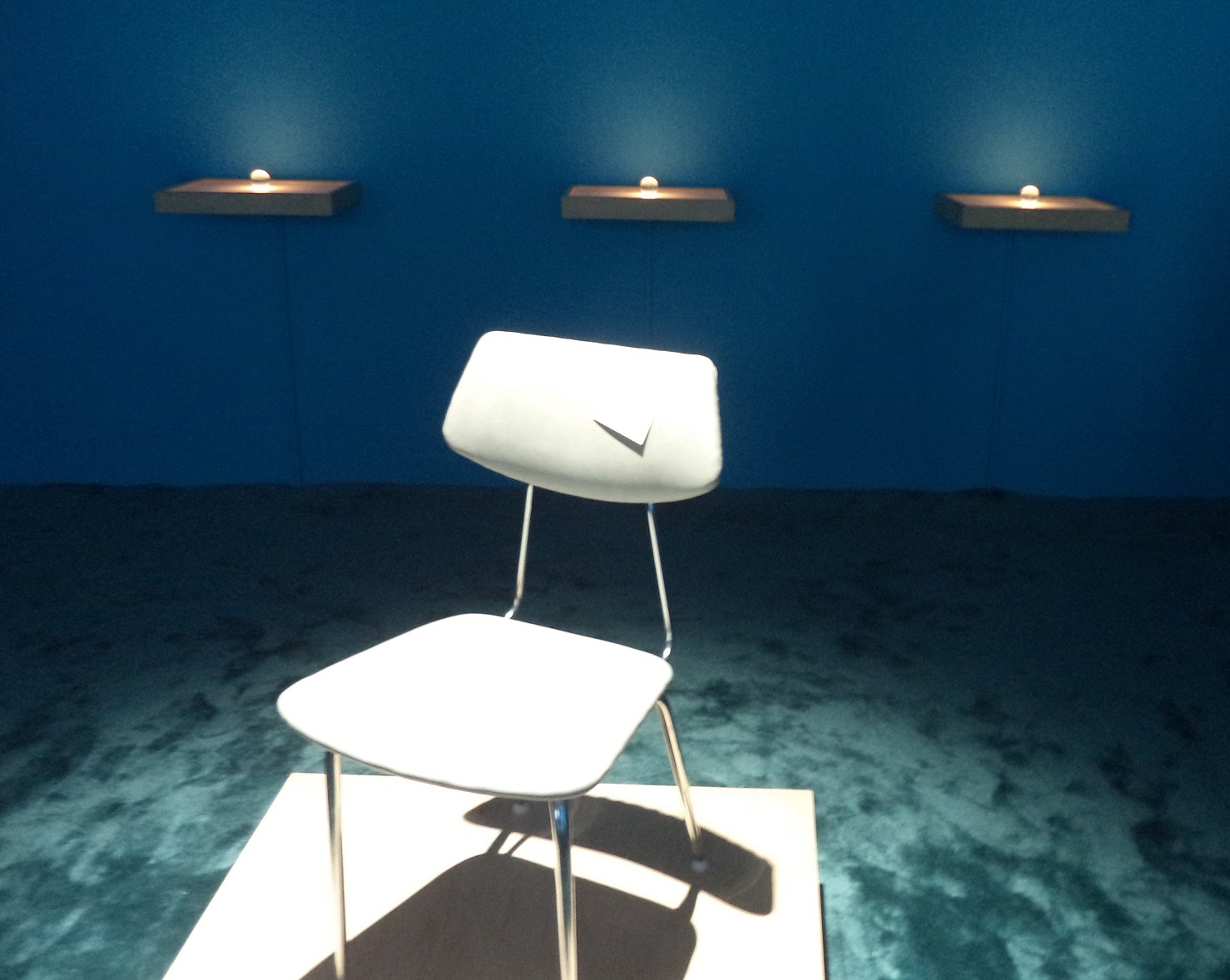
La sedia si percepirebbe al sogno premonitore, rispetto ad uno schermo per il visore direzionale. C’entra l’abisso della stanza, col blu delle pareti e dei tappeti. L’ambientazione ha una teatralità che vuole fermare il visitatore. La sedia è quasi angelica, con un’ala calata sulla Terra attraverso lo schienale. Quanto si può resistere alla stanchezza? Però Asta Fanney Sigurdardottir valuta il gioco, per la mente che dà una prassi all’immaginazione: c’è pure quello delle sedie musicali. Un angelo fa rilassare le nuvole, in Cielo, a parità di biancore. La sedia al centro della stanza sarebbe oracolare. Quella dentro la nostra mente ci rilasserebbe schematizzando una fantasia. Nell’allestimento della mostra, lo schienale avrà una benda, mentre le gambe s’incastreranno in una bocca della verità. Nel Mar di Norvegia, si trivella per gli idrocarburi (rischiando però di rovinare un ecosistema). Secondo la leggenda, la bocca della verità con molta suspense mangerebbe la mano di chi mentisse. La sedia invita se non a confessarsi pur sempre a raccontarsi. Curiosamente, a nord dell’Oceano Atlantico diversi Stati rivendicano (con ragioni più o meno credibili) la propria sovranità sullo scoglio Rockall, inaccessibile e sperduto.
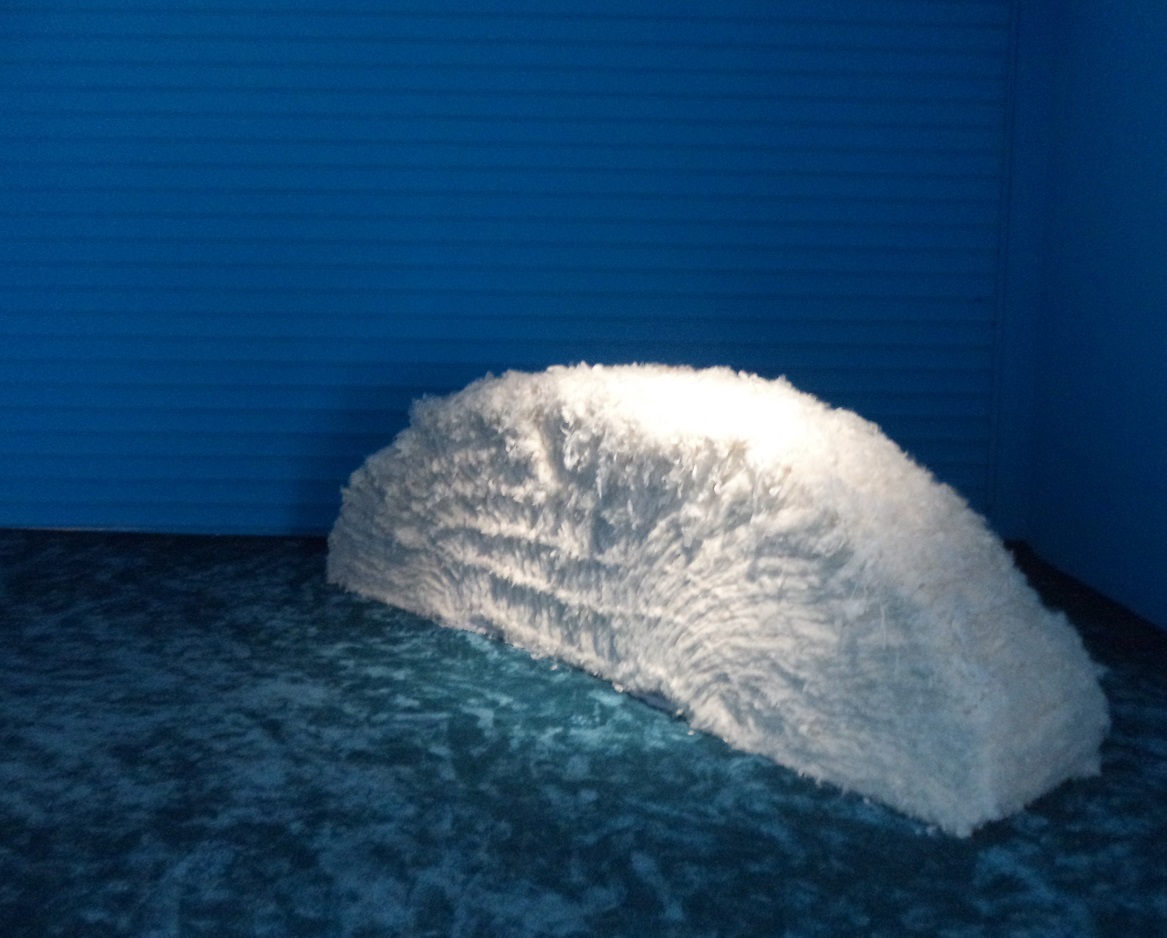
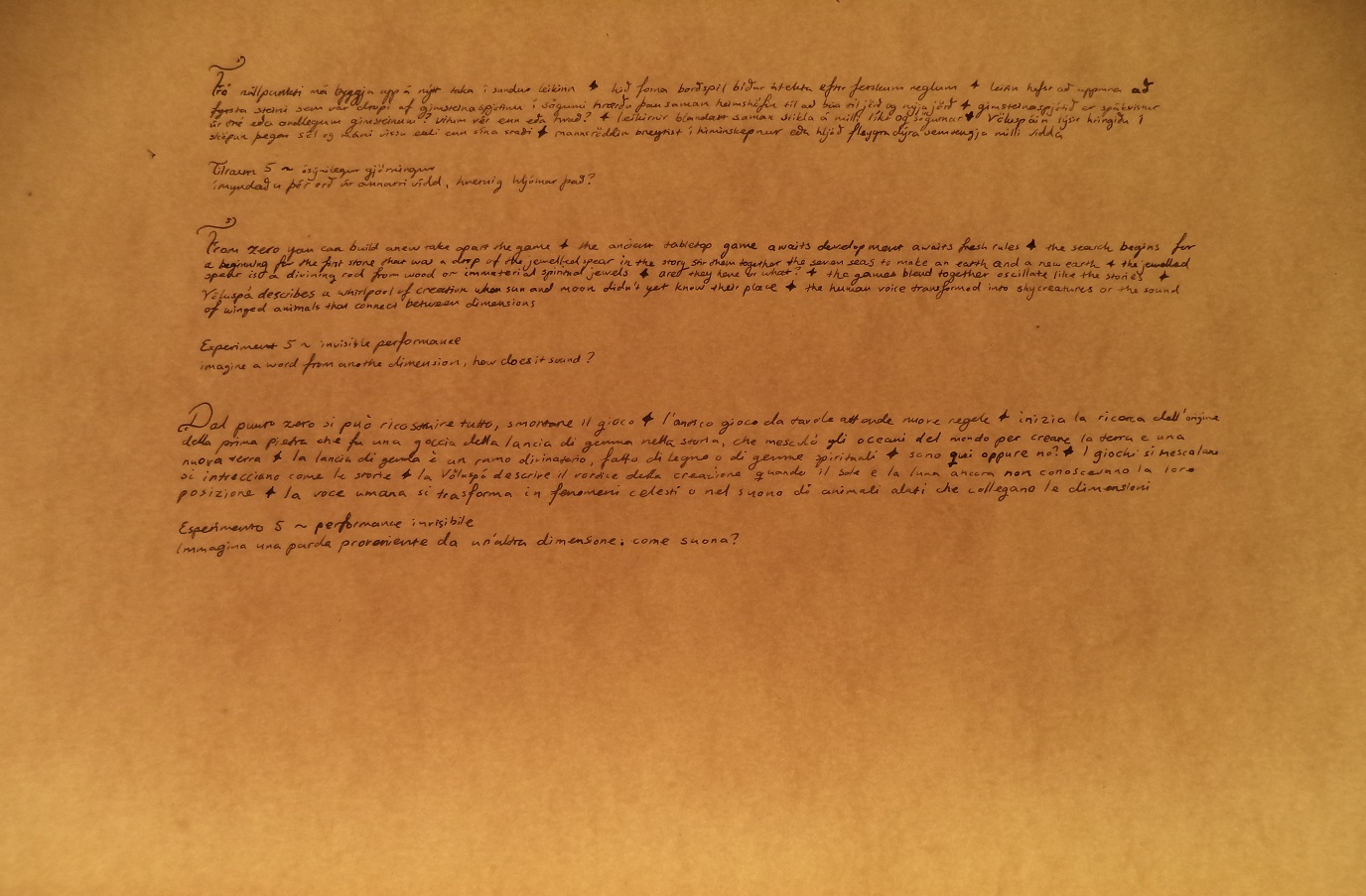
C’è l’allestimento d’un blocco a ventaglio, in lana islandese. Uno spicchio di sole avrà permesso uno stretching per i cristalli di ghiaccio. L’Artico è spesso tempestoso. Esiste lo spicchio della carena, per la nave. Forse la lana ammorbidirà pure la schiuma delle onde. Certamente essa viaggia per le navi mercantili. Una volta s’usavano le ruote a pale. Ci piace immaginare che la lana islandese annodi il ghiaccio, per rimpiazzare l’accendifuoco. Per scrivere liricamente, Asta Fanney Sigurdardottir usa il corsivo che si mischia con lo stampatello.
Se l’allestimento della sfera accettasse che questa bloccasse il trapasso del tempo, all’interno d’una clessidra, allora per decifrarla, pure in riferimento alle previsioni del futuro, servirebbe una pozione magica per una sabbia non solo in discesa dal logorio, giacché eccezionalmente esplosiva con la sua trasfigurazione. Asta Fanney Sigurdardottir non dimentica l’infanzia. Sua madre teneva una stanza piena di chincaglierie in disordine: con pezze, bottoni, spilli ecc… Si trattava d’un tesoro nascosto, agli occhi della figlia. Per questo, a Venezia è stata allestita una parete con un pentagramma di filo spinato, in cui i fiocchi di lana rivitalizzerebbero, rimpiazzando le note musicali, l’indolenzimento del surrealismo verso l’inquietudine, già caro a Yves Tanguy. In Islanda il ghiaccio punge; magari gli scogli si strapperanno come le pezze. Nel caso della letteratura, o genericamente della linguistica, la punteggiatura dà un rinforzo d’armonia alla comprensione (senza che noi ci arriviamo in fretta, per un automatismo a rischio di sbadataggine). Certo per un “pentagramma corallino” servirebbe il clima tropicale. Forse ad Asta Fanney Sigurdardottir interesserà un “arcipelago dei bottoni”? Questi non servono soltanto in collegamento per trattenere un vestito, ma anche individualmente come leve al “portale” che avviano circuiti assai complessi.
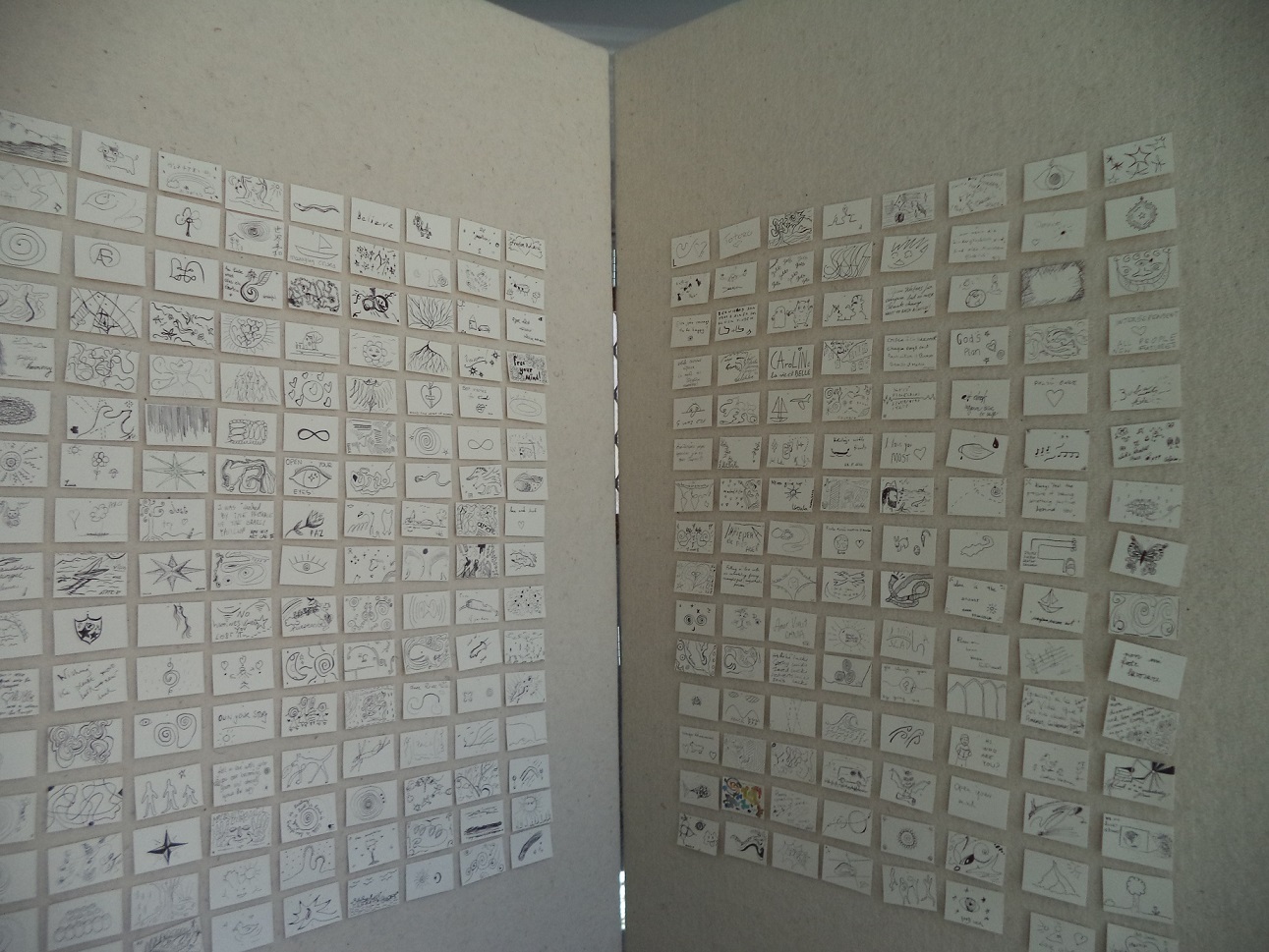
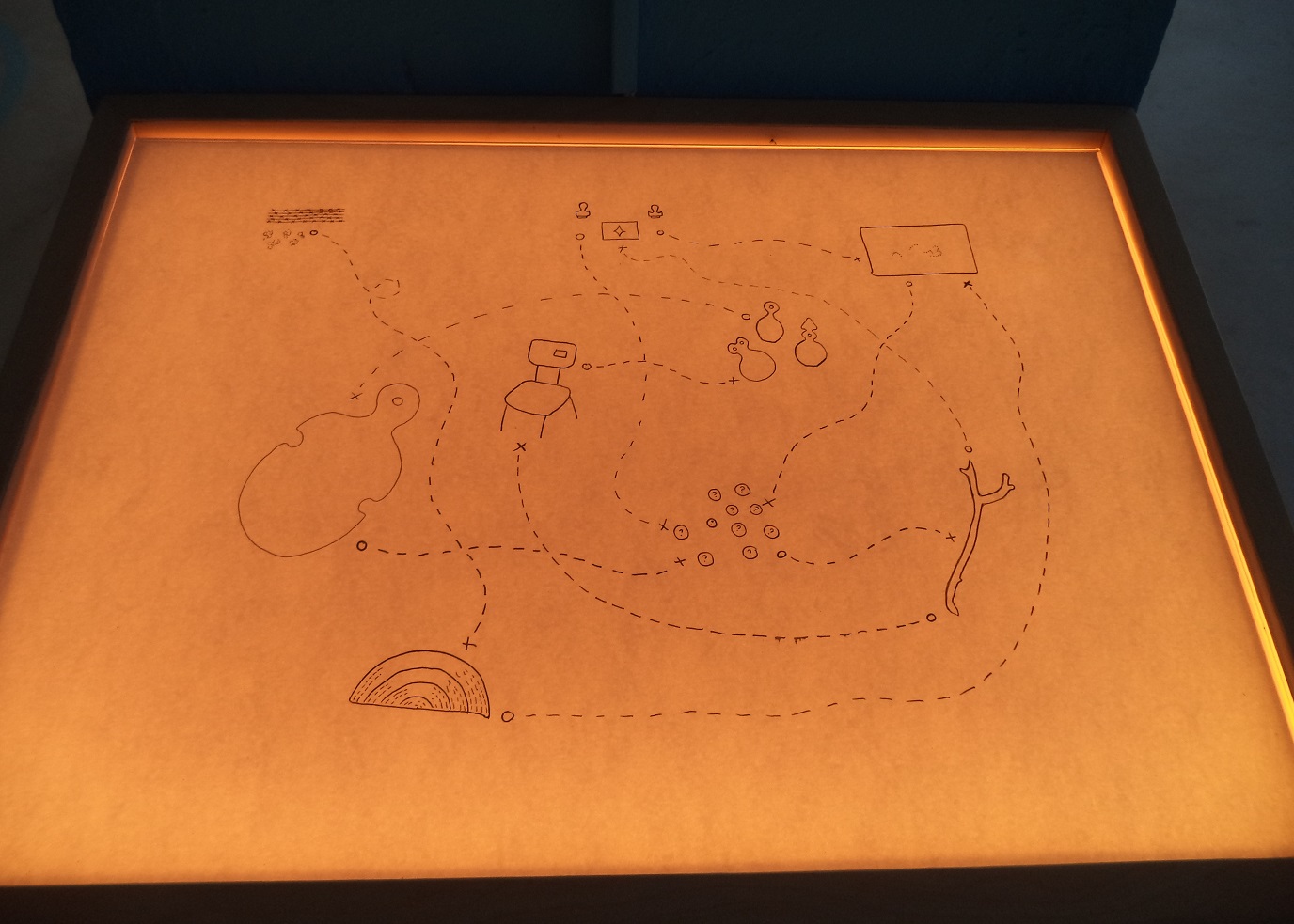
C’è l’installazione sul tappeto con la miniatura d’un sistema planetario. Asta Fanney Sigurdardottir può indagare la mitologia per il vaso di Pandora. Avvicinandosi al sole, per evitare la dissoluzione bruciando, occorrerebbe un amuleto come barriera di contenimento. Un illusionista professionale non svela mai al pubblico i propri trucchi. La bellezza rimane inaccessibile; razionalizzandola, essa perderebbe la carica attrattiva. Nel diorama esposto da Asta Fanney Sigurdardottir, i pianeti sono stati rimpiazzati dai vasi dove i coperchi s’annodano. Nel complesso, pare che un cuore trottoli. Chi è troppo sensibile, al di là della sua genuinità, rischia che gli altri lo fraintendano frettolosamente? Così il boomerang evolverebbe nel cortocircuito. A Venezia, i visitatori sono invitati a “proteggersi” disegnando un portafortuna. Con questo, la creatività mirerà addirittura ad un nuovo mondo. Per il disegno, al visitatore si consegna un foglietto.
Il diorama di Asta Fanney Sigurdardottir è anche praticabile al gioco da tavolo, con i vasi per pedine. Frequentemente, la fortuna diventa determinante al fine di vincere. La plancia di gioco ha la forma tanto a saccoccia per soldi quanto a cassa armonica per violino. Bisognerebbe capire se la casualità probabilistica d’una grossa vincita cambia sul serio la vita, per sentirsi realizzati… Al contrario, per uscire da una perenne sfortuna, ci sarebbe il “trucco” di cambiare le regole iniziali del gioco. Così fece per gli scacchi Bobby Fischer, di cui si ricorda il carattere polemico, o meglio “vulcanico”. Egli vinse il titolo mondiale nel 1972 a Reykjavik, la capitale islandese. Poi nel 1996 si battezzarono gli scacchi eterodossi al Fischer random o Chess960, dove le possibili posizioni di partenza sono 960, ed aggrovigliando creativamente il 360° per la normalità d’una visione completa (che a prescindere serve ai giocatori, per la memoria delle mosse da pianificare).
FURNISHING A SHIPYARD, THE INSULATION HAS A PORTAL ON THE IMAGINARY
For the Venice Biennale 2026, we can visit from 9 May to 22 November the National Pavilion of Iceland, and at the Docks Cantieri Cucchini. There the artist Asta Fanney Sigurdardottir, who is also a poetess, exposes. Aesthetically, she is interested in furnishing a shipyard, so allowing the insulation to have a portal on the imaginary. The float will save us through a talisman… At the Cantieri Cucchini, in the Saint Peter Island, whose cathedral started the Patriarchate of Venice, Asta Fanney Sigurdardottir staged the walls and the carpets with the blue of the sea. The lights would be perceived soft because these remained in a transfiguration of the ground. We know the Icelandic volcanism. So the buoyancy of the lava will release a pearl for the sun. The rays will revive the “tectonics of the schemas”, for the delimitations on the imaginary. But how much will every message be ciphered? The lyricism dissolves the conceptualism. There is the schematic throne of a chair which stabilizes, while the peak of a volcano would open the cone into a portal, through which we will fly over. The spurts of the waves will fall back down from the little stars which inspire. A rugged coastline is however magmatic when we perceive it. That will be ridden by a Merlin both solitary as a bear and docile as a sheep. The staging has a phantasmagorical vein.
In Venice the exhibition of Asta Fanney Sigurdardottir is called Pocket universe. An epistemology that aesthetically focuses on the schematism is searched. The tone of the blue is always perceived in the relaxation for an immersion. The polar bears in Iceland arrive accidentally, losing themselves on the blocks of ice which are detached from the Arctic. That would concern a relaxation for a transport paradoxically tended to a rearrangement. In Iceland there are more sheep than citizens. The wool has to be padded, against the frost. But there will be the “tears” of the tectonics, from Eurasia to Northern America. For the men, the “buoy” of a sudden voice would complain about the loss of an orientation: already in itself, trying to cling to the hearing (with the commonality of a perceptual abstraction). In Iceland virtually not even the borders would exist, because the inner fault belongs to the continents, with their multiculturalism. The seam will be faced from the horizontal values, in sociology, as regards the personal affections: with the friendship, the generosity, the love etc… The shipyard will overturn the bait of an undertow which stresses, in the monotonous everyday life. We always sail towards an innovation, if not towards an unpredictability! We like imagining that Iceland is like a panoramic balcony for a long bridge that connects Eurasia with Northern America. Therefore the columns will stop the needles of the time, in a clock face. The basaltic rocks with a hexagon would buffer with their exceptionality the naturalness of an erosion.
Specifically, the “wizard” on the portal of the imaginary that Asta Fanney Sigurdardottir invokes is called Creature Zero. For her dress, with the fur of snow, there was a help from the designer Sol Hansdottir. From the video installation, we follow the story of a geological research. The Creature Zero almost realizes a circumnavigation of the Earth, from Iceland to Japan. Aesthetically the network of fluxus is mentioned. Asta Fanney Sigurdardottir wishes to recover a philosopher’s stone, able to catalyze in itself the origin of the Earth, purifying the history of its decompositions. Presumably, we will have to dig. The artist shows the miniature of the Earth’s core, through a sphere with a light source, which will “erupt” at the tear of a string, compared to a “spinning top” of the time which eternizes (if the present is such because it postpones the past, and because it anticipates the future). Finally the stratification of a message, that the poetry deciphered, will be revealed. If the genealogical tree disperses, at least the talisman romanticizes the metal detector. An artist is inspired by precise sources. The hermeticism of an island addresses the castaway; for its miniature, a compass can be valid. An amulet has an energy because we give this one there, through a mythology. Specifically it serves to stop the time, hoping that this is favourable. In Iceland the energy of the volcanoes emanates in the ambiguity of the continental plates. But how much will the Creature Zero have a woven with fur in needles? In Iceland there is a popular mythology about the elves, which gambol in a bridge between the cracks of the rocks. They orient themselves in better way, if the rise and fall for the meadows remain desolate. The Creature Zero will leap with a pinch of magic from the short tail of the sheep. In parallel, the compass will serve even to convey the sea currents, beyond the alarm of a buoy, against the loss. Asta Fanney Sigurdardottir debates the imaginary with optimism, if not for a progressivism. At the beginning her movement until a Japanese island was contorted. But the artists can appreciate the improvisation, if the work remains a work in progress for its reinterpretation. Asta Fanney Sigurdardottir knew in Japan the legend for which, watching in the sky a gathering of birds, even a divinity would hide itself. The ornithomancy is practised in many cultures. The birds have the peculiarity of evoking the dinosaurs. They maintain in the body a temperature very warm. In the Japanese mythology, the divinity would have created the emerged lands stirring the ocean with a bejewelled sword. The drop would have evolved into the stone.
The chair would be perceived in a premonitory dream, compared to a screen for a directional headset. An abyss for the room is relevant, with the blue of the walls and of the carpets. The setting has a theatricality that wants to stop the visitor. The chair is almost angelic, with a wing fallen on the Earth through the backrest. How much can we withstand a tiredness? However Asta Fanney Sigurdardottir considers the game, for a mind that gives to the imagination a praxis: there is also the game with the musical chairs. An angel allows the clouds to be relaxed, in the Heaven, being equal to the whiteness. The chair in the middle of the room would be oracular. That one inside our mind would relax us schematizing a fantasy. In the staging for the exhibition, the backrest will have a bandage, while the legs will be wedged in a mouth of truth. In the Norwegian Sea, there are the drills for the hydrocarbons (however risking ruining an ecosystem). According to the legend, the mouth of truth with much suspense would eat the hand of somebody who told lies. A chair invites maybe not to confess but surely to tell. Curiously, in the North Atlantic Ocean different States claim (with reasons more or less plausible) their sovereignty over the islet of Rockall, inaccessible and stray.
There is the staging of a block as a fan, with Icelandic wool. A slice of sun would have allowed a stretching for the ice crystals. The Arctic is often stormy. A slice of the hull exists, for a ship. Maybe the wool will soften even the foam of the waves. That one surely will travel on the merchant ship. In the past the paddle wheels were used. We like imagining that the Icelandic wool knots the ice, to replace a fire starter. To write lyrically, Asta Fanney Sigurdardottir uses the cursive mixed with the block letters.
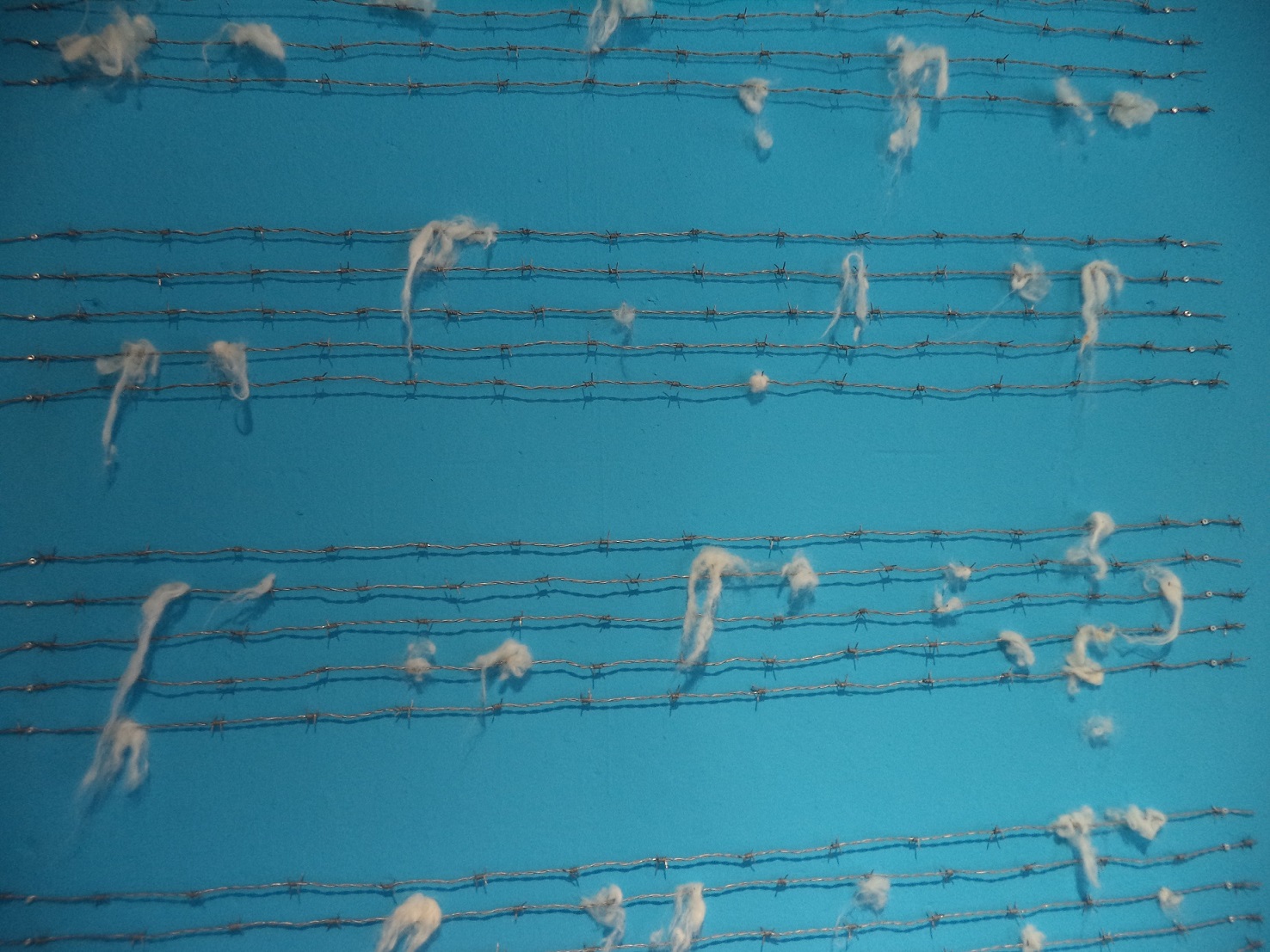
If the staging of the sphere accepted that this one blocked the passage of time, inside a hourglass, so for its deciphering, also with reference to the future predictions, we would need a magic potion for a sand not only downhill for wear and tear, because this one will be exceptionally explosive with its transfiguration. Asta Fanney Sigurdardottir does not forget the childhood. Her mother kept a room full of knick-knacks in disorder: with bolts, buttons, pins etc… That concerned a hidden treasure, in the eyes of the daughter. Therefore, in Venice a wall with a staff of barbed wire was arranged, where the flakes of wool would revitalize, replacing the musical notes, a soreness of the surrealism into the apprehension, already dear to Yves Tanguy. In Iceland the ice stings; maybe the rocks will be torn as the bolts. In the case of literature, or generically of the linguistics, the punctuation gives to the comprehension the reinforcement of the harmony (preventing us from arriving there hastily, for an automatism at risk of carelessness). Surely a “coral staff” would need the tropical climate. Perhaps will Asta Fanney Sigurdardottir be interested in an “archipelago of the buttons”? These not only serve in connection to hold a dress, but also they serve individually as levers, in a “portal”, which start circuits very complex.
There is the installation on the carpet with the miniature of a planetary system. Asta Fanney Sigurdardottir can investigate the mythology for a Pandora’s box. Approaching the sun, to avoid a dissolution by the fire, we would need an amulet as a containment barrier. A professional illusionist never reveals for the public his tricks. The beauty remains inaccessible; rationalizing it, it would lose the attractive charge. In a diorama exposed by Asta Fanney Sigurdardottir, the planets were replaced by the vases where the covers are knotted. Overall, it seems that a heart spins like a top. Does somebody, who is too much sensitive beyond his genuineness, risk that the Others misunderstand him hastily? So the boomerang would evolve into a short circuit. In Venice, the visitors are invited to “protect” themselves, drawing a good luck charm. Through this, the creativity will even aim at a new world. To draw, the visitor receives a slip of paper.
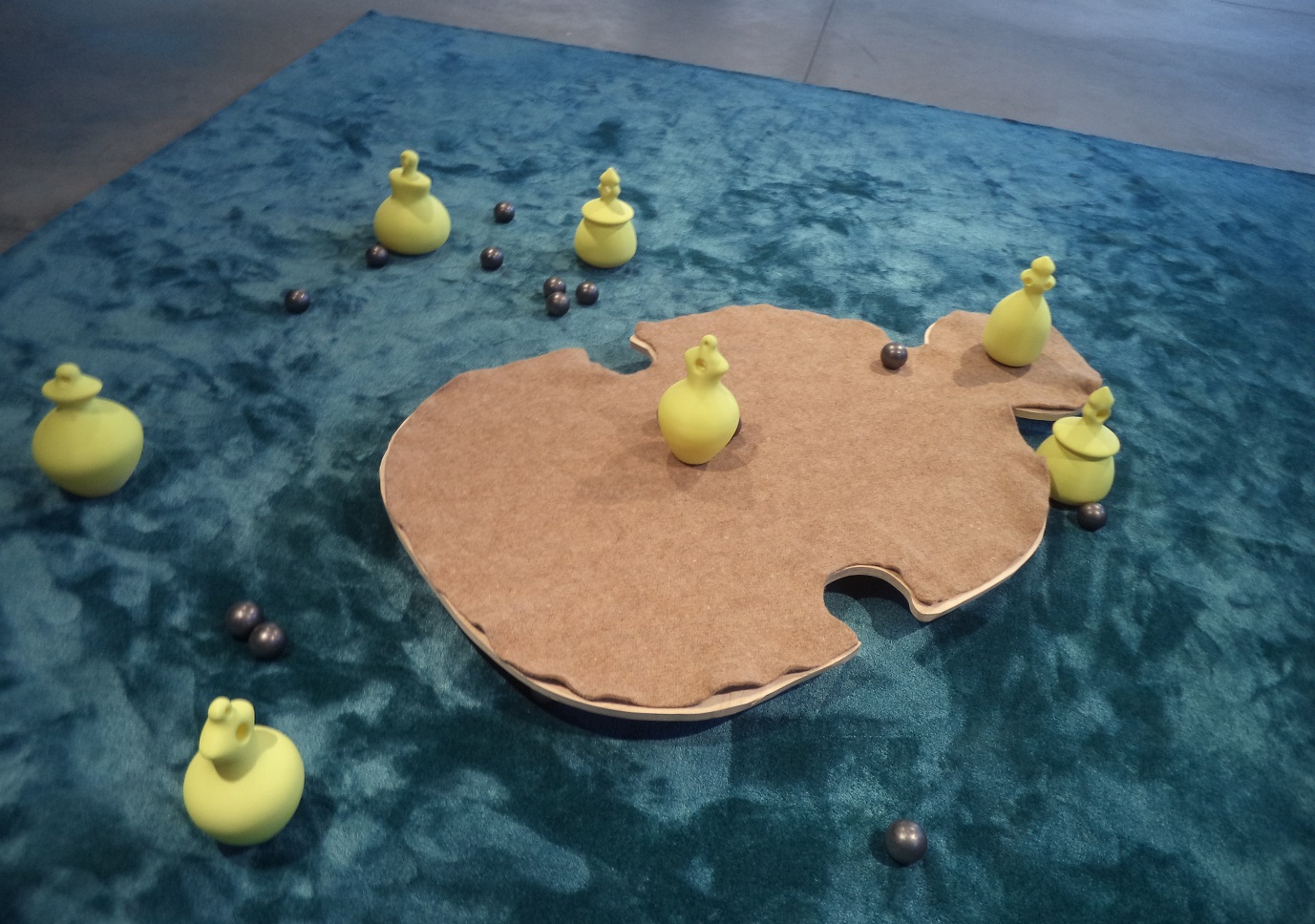
The diorama of Asta Fanney Sigurdardottir is also feasible as a board game, with the vases as pawns. Frequently, the luck becomes decisive in order to win. The board for the game has the shape both of a money bag and of a sounding board for a violin. We should understand if the probabilistic randomness of a big win really changes our life, to feel accomplished… To the contrary, to escape from a perennial misfortune, the “trick” of changing the initial rules of the game would happen. Bobby Fischer did this, for the chess; we remember his polemic, or rather “volcanic”, character. He won the world championship title in 1972 in Reykjavik, the Icelandic capital. Then in 1996 the heterodox chess for Fischer random or Chess960 was launched; there the possible starting positions are 960, and entangling creatively in the normality of the 360 degrees for a complete view (that regardless is necessary to the players, for the memory of the moves that are planned).

Paolo Meneghetti

Be First to Comment