[Originariamente pubblicato in data 10 marzo 2019]

Vuoi leggere un libro su questo tema? L’eterna battaglia della mente – Scacchi e filosofia della guerra!
Iscriviti alla Newsletter!

Vuoi leggere un libro su questo tema? L’eterna battaglia della mente – Scacchi e filosofia della guerra!
Iscriviti alla Newsletter!

How does language connect to the world? A simple, ancient question that should hunt every serious scholar in any field. For example, what do we mean when we say, ‘The army fought bravely against Nazi Germany’ or ‘All crows are black’? How can we connect an ‘army’ to ‘braveness’ and its ‘fighting’ ‘against Nazi Germany’? What do we actually mean by ‘all crows’? No matter how one wants to tackle the problem, this is quite an astonishing open-ended hurdle that every new generation of thinkers must recalibrate or reframe.[1]
Plato started the quest because of his idealist conceptualization of knowledge, which was understood only as perfect in terms of access to the ideas which, in turn, must refer to the world somehow. However, how to connect his ideas to a specific ‘table’ is not an easy endeavor and Aristotle tried to reverse the process: we describe ‘tables’ given the knowledge we get from every specific table. But then, how can we have a general notion of tables? From where this ‘generality’ comes from and how can it be justified? Ultimately, these answers can be partially given reformulating the problem in terms of meaning. The meaning of the sentence ‘the table is black’ depends on the meanings of its constituent components. What does meaning mean? We need to clarify what the meanings of words (in theory, all of them, including prepositions, indexicals, and prepositions).
Interestingly, so-called idealist philosophers such as Renè Descartes and Baruch Spinoza reinterpreted the idealist vision in subjective terms. Plato assumed that ideas are external non-causal entities existing outside the phenomenon and the mind. They stay there eternally unmoving mysteriously able to give us a real glimpse of a stable world. Firstly, Descartes reinterpreted this concept within the subject itself: ideas are stable construction of the cognitive subject whose access is granted by direct introspection whose strength is supplemented by reason. However, the grasp of concepts can be independent from reason, which has the primary goal to make arguments based on those ideas and concepts. Of course, Descartes had the same problem Plato had; that is, how to connect ideas to the world. In his case, he had to make a brilliant and convoluted argument based on the alignment between ideas and the world granted by God and by the general architecture of cognition.[2] Spinoza, partially endorsing and criticizing Descartes, extended those lines of arguments: not only ideas can be explicitly grasped directly through a special direct introspection (intuition) but reason is the sole means to grant justification in elaborating new ideas.[3]

La storia del pensiero antico sulla felicità si è incentrato su alcuni concetti e termini comuni. La felicità è il risultato dell’applicazione della virtù ed essa è alla portata dell’uomo, purché quest’ultimo si concentri nel pieno dispiegamento della sua stessa natura che, come abbiamo visto, è concepita essenzialmente nella sua razionalità. “Sii la tua ragione” poteva essere il comandamento comune alle teorie considerate sino ad ora e la visione dell’uomo come essere razionale è il fil rouge che unisce le teorie dell’antichità classica. Ma con l’avvento del cristianesimo si introduce un nuovo termine nella complessa equazione il cui risultato è la suprema felicità: il Dio creatore cristiano.
In queste pagine abbiamo già incontrato la figura del dio, ora declinata come puro pensiero di pensiero (il caso di Aristotele), ora declinata come provvidenza immanente nel mondo (come nella filosofia stoica), ora concepita come semplice entità indifferente rispetto alle sorti degli esseri umani (come sosteneva Epicuro). Ma nella filosofia cristiana e, come vedremo, nel pensiero di Agostino, il ruolo di Dio, un Dio creatore la cui essenza è l’amore, è di gran lunga di maggior spessore anche perché in Lui Agostino rintraccia la fonte stessa della felicità umana. Per tale ragione, il nostro percorso inizierà proprio da una succinta analisi di cosa sia il Dio di Agostino e quale sia la sua connessione con l’uomo e la felicità.
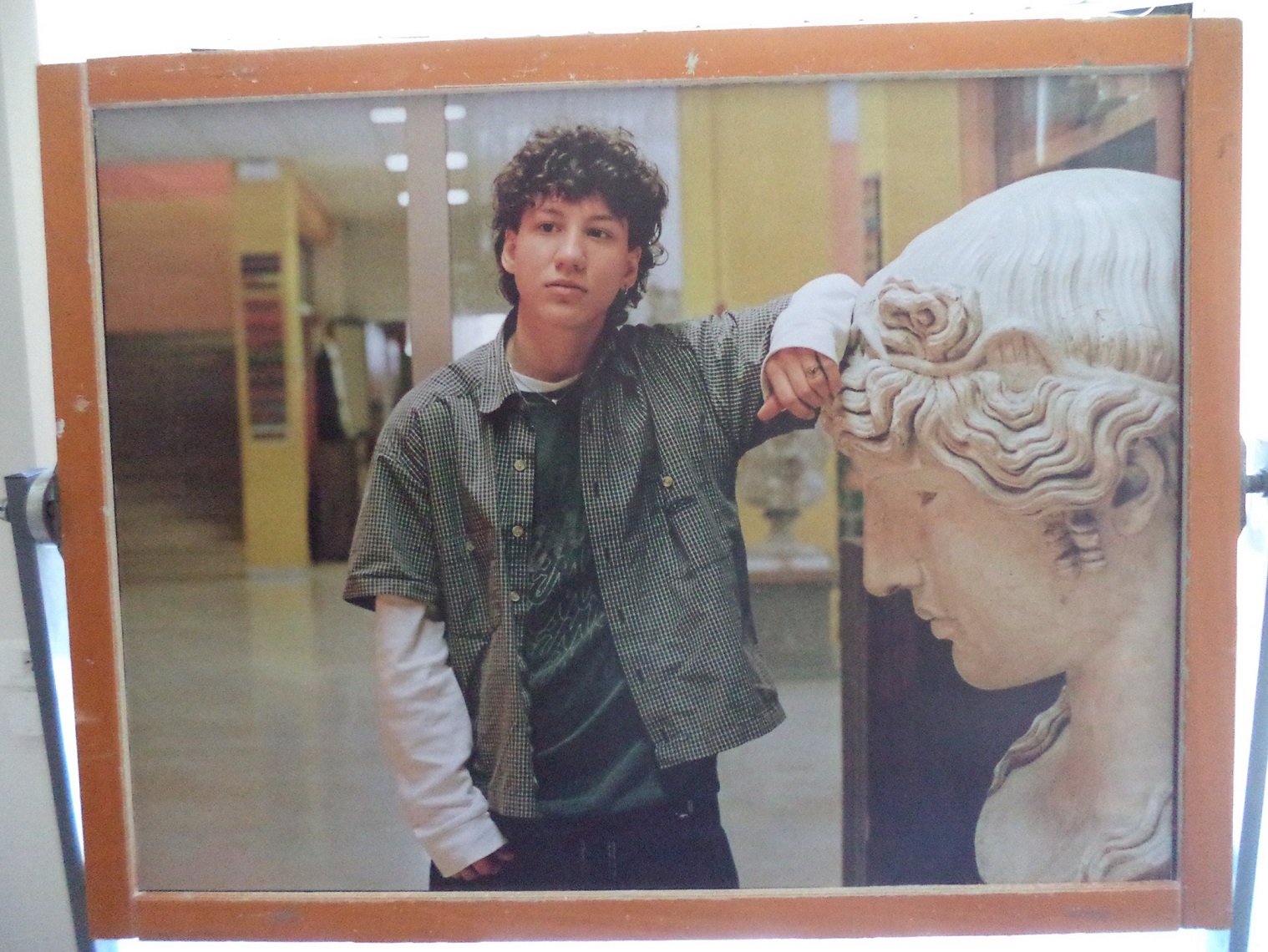
Una conferenza di filosofia estetica di Paolo Meneghetti, a Rionero in Vulture (PZ) Mercoledì 30 Luglio 2025, e per interessamento dell’Associazione “Centro Studi Leone XIII” (presieduta da Pasquale Tucciariello, presente in sala)
Edmund Husserl dice che, abbandonando l’idealismo, noi abbiamo sempre coscienza < di > qualcosa. Ma come provare ad allacciarvi un materialismo? Gaston Bachelard invita a prendere fiducia verso la propria intimità, dall’anima. Questa è l’immaginazione materiale. Gli elementi classicamente naturali dell’aria, dell’acqua, della terra e del fuoco si renderanno percepibili per immedesimazione. Conta il coinvolgimento della coscienza, oltre la mera constatazione d’un realismo. L’impressione percettiva garantisce un “ripasso” su quello che si conosce. Ad esempio il giallo d’una sagoma può volgere sul viola: per la stanchezza dell’occhio, col concorso della luce, vagheggiando dall’emotività ecc…

Run out and find me a four-year-old child. I can’t make head or tail out of it. – Groucho Marx
For many years I studied formal logics and set theory alongside everything else. They were the intrinsic foundation of my background work, the one that never appeared on the surface because it was too personal and too specific at the same time.[1] Moreover, in spite of many applications of formal logic thinking from war to society, I never fully embraced the sheer love for machinery or formal symbolism because I am much more semantically driven.[2] In fact, I am obsessed by semantics and natural language and the more I think about them the deeper the obsession. Although I have been always skeptical on analytic philosophy implicitly share belief that it is all about bad use of unclarified language and truth-values, I am in fact as obsessed as the later Wittgenstein or Kant in the three major critiques, which are essentially a quest for understanding how our judgements (statements) is even possible. In fact, I even argued that the deconstruction of judgement through language was ultimately what Kant achieved in the Critique of Pure Reason.[3]
However, this does not change my sheer admiration for those pillars of thought who elaborated formal logics how we know it and Kurt Godel has been my logical hero since I started my logical quest twenty-four years ago.[4] As a result of my effort to teach formal and informal logics, I arrived to conceive an idea to how teach basic principles of formal logics to kids. I am not very versatile with very young kids, that is, less than 14 and I don’t have any evidence of specific applications of the system I am proposing here, but the idea is very simple. Formal logic is about creating a system of codified symbols to be manipulated syntactically, that is, through the ‘simple’ application of rules, we can be creative in selecting what symbols we want to use. What if we are creative and use emoticons for formalizing propositional logic?
With this intuition in mind, I propose the following formal logic game that could be used for teaching logic to kids. I welcome any reader to try and report what happened and how it worked in the comments section.

In questo scenario, filosofia e psicoanalisi si incontrano: entrambe sono chiamate a pensare l’impensabile, a trattenersi presso il negativo senza cedere alla tentazione del senso immediato. Il pensiero, in quanto tale, si origina sempre da una frattura: «Pensare è sempre pensare contro se stessi», scriveva Adorno, rifiutando ogni riconciliazione prematura (Adorno, 1966)[5]. È su questa frattura che questo saggio intende soffermarsi, per pensare il trauma non come un limite, ma come una soglia: il luogo stesso in cui si apre la possibilità della trasformazione.
La difficoltà a simbolizzare l’esperienza traumatica ha prodotto un incremento di fenomeni regressivi: violenza, panico morale, negazione, agiti collettivi. Tali manifestazioni possono essere comprese come “deiezioni psichiche”, secondo la felice espressione coniata da Federica Mazzocchini, ossia come espulsioni dell’indicibile che il soggetto non riesce a elaborare mentalmente. Come nota Julia Kristeva, «ciò che viene rigettato non per questo scompare. L’abietto è ciò che inquieta un’identità» (Kristeva, 1980)[4].

Arnold Schönberg parla del lungo percorso musicale che lo ha portato a quella che lui chiama la “scoperta” della dodecafonia in una conferenza del 1941 da lui tenuta all’Università della California, poi rivista e pubblicata nel 1950 nella raccolta di saggi Style and Idea. La dodecafonia, spiega, non è un “sistema della scala cromatica”, ma un vero e proprio metodo. Sono stati necessari ben dodici anni di tentativi per riuscire nella titanica impresa di creare un nuovo modo di comporre, in grado di sostituire quelle “articolazioni strutturali” che prima venivano garantite dal sistema tonale. Schönberg chiama questo nuovo metodo da lui ideato metodo di composizione con dodici note poste in relazione soltanto l’una con l’altra. La caratteristica principale di questo nuovo – e complesso – modo di comporre musica è quella di utilizzare soltanto una serie di dodici note diverse per ogni composizione: nessuna nota può essere ripetuta nella serie e questa deve obbligatoriamente utilizzare tutte le dodici note della scala cromatica in un ordine diverso rispetto a quello in cui si presentano nella scala. Come spiega Eimert nel suo Manuale di tecnica dodecafonica, “la musica dodecafonica esiste soltanto come sistema di rapporti tra le dodici note […] la più piccola unità di questa musica è la configurazione delle dodici note…”[1]: se la più piccola unità del sistema tonale è la singola nota, nel metodo dodecafonico, invece, essa diventa la serie.