
Press "Enter" to skip to content

Categoria: Epistemologia

Nature is Not Written in Mathematical Language

By NASA and The Hubble Heritage Team (STScI/AURA) – M87 jet.jpg, Public Domain, https://commons.wikimedia.org/wiki/Special:Redirect/page/40397237

Introduction – Why Galileo?

Galileo Galilei is often portrayed as one of the greatest scientists ever lived, primarily because everybody knows him. In fact, for all the standard statements around the ‘best’ philosopher or mathematician, rarely reasons are given or an alternative candidate pool is listed.  For example, it seems questionable to consider this ‘candidate’ existing as there is no clear ‘good order’ to be established within the list of ‘the greatest scientists’ as there usually no explanation for the rule through which an item was selected among others. It is likely the case that, for some circumstantial condition, a given name, possibly ignored during their life, was then passed to the common vocabulary to mean a particular representative of the set they belong. For example, it is my extensive experience that almost no one knows much about Albert Einstein’s life or research, but everyone today (2026) refers him to mean the ‘exemplary scientists’ (once it was Newton, known progressively less by the ‘wide public’).

When it comes to Galileo, he undoubtedly was an important figure, but this does not say much. What instead I want to argue against something often considered an obvious mantra: ‘Nature is written in mathematical language’, a short encapsulation of the early revolution in physics from the Aristotelian to the ‘modern’ notion of it. To this day, the ‘envy’ of other sciences and research fields is still based on the ‘mathematical aspirational dogma’, that is, mathematics applications discriminate the ‘hard core’ science from everything else.

“Philosophy [nature] is written in that great book which ever is before our eyes — I mean the universe — but we cannot understand it if we do not first learn the language and grasp the symbols in which it is written. The book is written in mathematical language, and the symbols are triangles, circles and other geometrical figures, without whose help it is impossible to comprehend a single word of it; without which one wanders in vain through a dark labyrinth.”[1]

First, I will try to prove that this statement is wrong, that is, false. Second, I will argue that this is not how ‘science’ sees the world and, finally, that this is not how we should see it and, in fact, it is impossible otherwise. Let’s start from the beginning but, before that, a specification. I am not ‘against’ Galileo about whom I have my own opinion. My arguments equally apply to any assumed philosophy of science based on similar premises or that explicitly or implicitly endorse it. As Galileo’s formulation is as famous as ‘clear’, we shall use it in proxy of something potentially more elaborated and, as such, more obscure.

Popper e la crescita della conoscenza

[Originariamente pubblicato in data 18 novembre 2011]

DorianKBandy, CC BY-SA 4.0 <https://creativecommons.org/licenses/by-sa/4.0>, via Wikimedia Commons

Scopri Intelligence & Interview di Scuola Filosofica!

Iscriviti alla Newsletter!

Consigliamo Filosofia della mente e l’intervista al professor Silvano Tagliagambe


Una lettura, critica negli intenti, ma purtroppo ancora frammentaria, del contributo che la razionalità critica ha dato e continua a dare ad una epistemologia della “crescita della conoscenza”

Introduzione

Uno dei punti, a dire il vero rarissimi, che sembrano accordare una buona parte degli epistemologi cimentatisi nell’arduo compito di valutare criticamente il pensiero popperiano, o almeno quei pochi che io ho avuto l’occasione di conoscere, può essere a mio avviso facilmente riconosciuto nel piglio con cui il filosofo viennese viene da questi affrontato. Proprio in questo caso uno strumento eccezionalmente accessibile e semplice, come l’indice, che già  può concederci ,se ben valutato, un ottimo colpo d’occhio sull’indirizzo generale di qualsiasi testo, risulta esserci particolarmente d’aiuto per individuare sin da subito i punti cardine della critica filosofica. Una delle più complete antologie redatte su questo autore[1] inaugura una serie di articoli, rivolti a Sir Karl da una serie scelta di critici, con un saggio dal titolo: “Popper and the Vienna Circle” redatto da Viktor Kraft[2]. È singolare notare che sin da subito si inaugura quello che poi sarà un leitmotiv di molti altri approcci al medesimo problema, i rapporti fra Popper ed il Circolo di Vienna vengono confermati e smentiti al contempo proprio nelle prime righe del saggio:

Diagrams’ Ontology and Epistemological Commitments

An Unexpected Journey into Everyday Thinking

Prologue – From Where All This Started

I recently read Philosophy of Physics – Space and Time written by the philosopher Tim Maudlin.[1] It is a short, dense book intended to be readable by everyone, but, as usual with these types of works, it requires very careful attention from the readers and effort to be unpacked, as we would wish from an excellent philosophical essay. Despite its shortness, Philosophy of Physics has been one of the most interesting readings on philosophy of science I have had in quite some time, not only because it had been a long time since I read a book or research paper in this philosophical area.[2] There are remarkable considerations in Maudlin’s work that would be worth an essay on their own, but here I am mentioning this reading because it has been the philosophical starting point for this essay, because it clearly posed specific ontological and epistemological questions when analyzing diagrams, mind maps and sketches.

Paradoxes of Skepticism

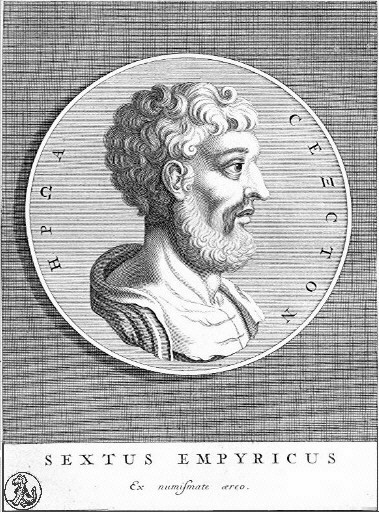
https://en.wikiquote.org/wiki/Sextus_Empiricus

Skepticism – Between a Malevolent Use of Language and Positive Philosophical Attitude

Introduction

Skepticism is an ancient philosophical attitude. I have been skeptical about many forms of skepticism and I still am.[1] My argumentation against it was that skepticism is based on a malevolent use of language to prove something clearly paradoxical or contradictory. In a sense, all skeptical philosophy is impossible in the strongest sense of the word ‘impossible’. The grounding of this conclusion is very simple. The skeptics are unable to prove what they want, and they construct arguments whose nature is self-defeating in a very fundamental sense.

However, at the same time, skepticism is an unreplaceable component of all philosophical edifices and, beyond them, all human thinking. Among the best philosophers were deemed skeptical at one point and the accusation was almost invariably right. They were skeptical about something specific, and their arguments were to disprove a portion of the assumed shared beliefs to replace them with something different, being it a reformist or creative endeavor. Here I try to show why both tenets are true: radical skepticism is pointless and yet we need some form of it. Understanding how this is not a contradiction is the topic of this essay.


Skepticism and Its Philosophical Relevance

Skepticism is a philosophical attitude, not a philosophy. As an attitude, it is necessary and it consists in the unwillingness to accept anything as true or given or presumed beforehand. At the same time, this is not the primary objective of classic skepticism, whose goal was aligned with Stoicism and Epicureanism: peace of mind (ataraxia) from the ‘evils’ of the world.[2] We must start from the extreme form of it; that is, skepticism as a philosophy and not just as an attitude: “Sextus presents scepticism as a kind of philosophy, distinguished from others not by the content of its doctrines (there are none), but apparently by its attitude to philosophical problems and theses.”[3] According to this position, there is no solid foundation for any statement and proposition, no matter the origin, cause and formulation. The skeptical argument is the refuse of any possible argument at its extreme.

Memory, Meanings and Language – How We Think About Things

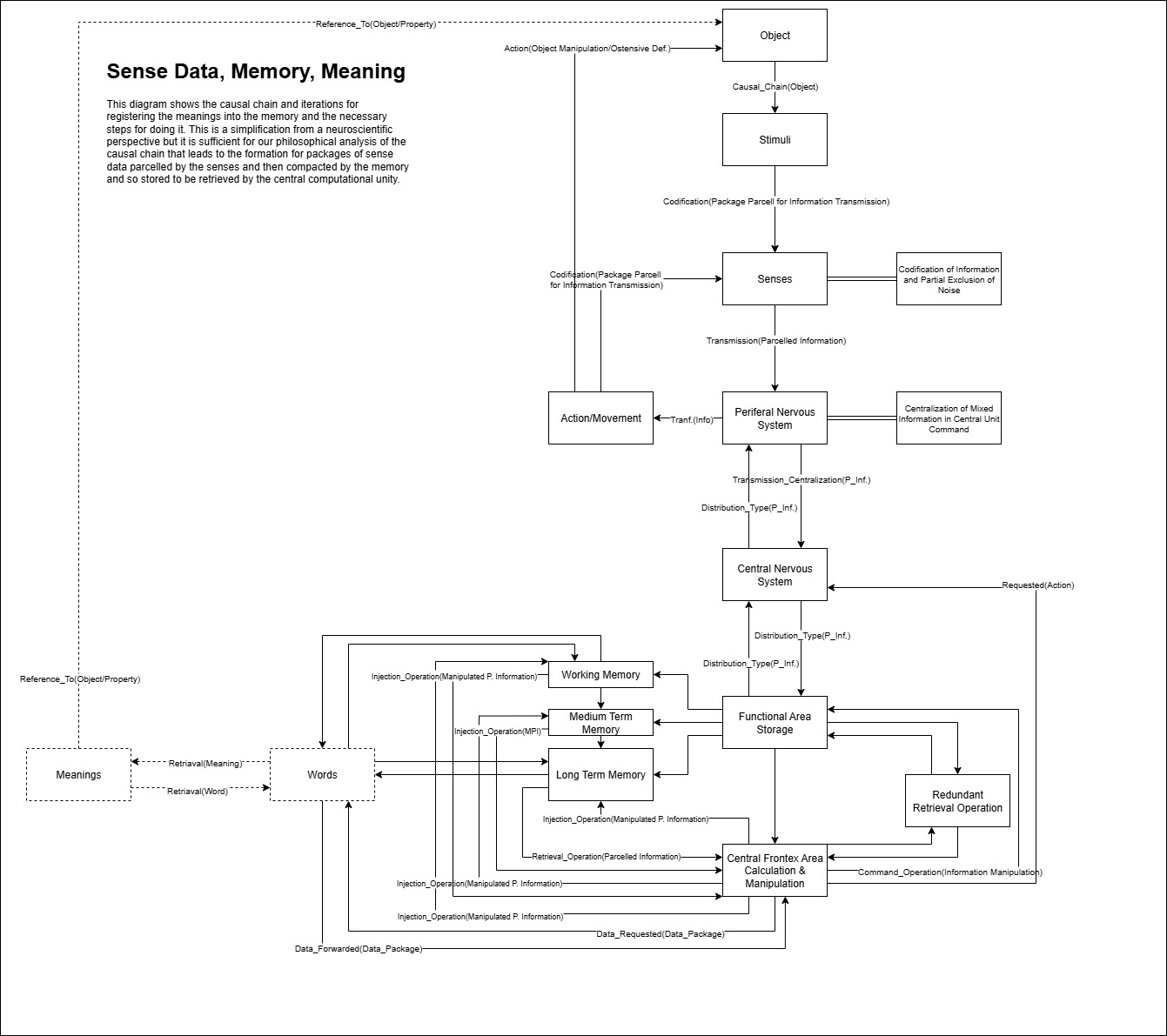
Memory – Copyrights Owned by the Author

How does language connect to the world? A simple, ancient question that should hunt every serious scholar in any field. For example, what do we mean when we say, ‘The army fought bravely against Nazi Germany’ or ‘All crows are black’? How can we connect an ‘army’ to ‘braveness’ and its ‘fighting’ ‘against Nazi Germany’? What do we actually mean by ‘all crows’? No matter how one wants to tackle the problem, this is quite an astonishing open-ended hurdle that every new generation of thinkers must recalibrate or reframe.[1]

Plato started the quest because of his idealist conceptualization of knowledge, which was understood only as perfect in terms of access to the ideas which, in turn, must refer to the world somehow. However, how to connect his ideas to a specific ‘table’ is not an easy endeavor and Aristotle tried to reverse the process: we describe ‘tables’ given the knowledge we get from every specific table. But then, how can we have a general notion of tables? From where this ‘generality’ comes from and how can it be justified? Ultimately, these answers can be partially given reformulating the problem in terms of meaning. The meaning of the sentence ‘the table is black’ depends on the meanings of its constituent components. What does meaning mean? We need to clarify what the meanings of words (in theory, all of them, including prepositions, indexicals, and prepositions).

Interestingly, so-called idealist philosophers such as Renè Descartes and Baruch Spinoza reinterpreted the idealist vision in subjective terms. Plato assumed that ideas are external non-causal entities existing outside the phenomenon and the mind. They stay there eternally unmoving mysteriously able to give us a real glimpse of a stable world. Firstly, Descartes reinterpreted this concept within the subject itself: ideas are stable construction of the cognitive subject whose access is granted by direct introspection whose strength is supplemented by reason. However, the grasp of concepts can be independent from reason, which has the primary goal to make arguments based on those ideas and concepts. Of course, Descartes had the same problem Plato had; that is, how to connect ideas to the world. In his case, he had to make a brilliant and convoluted argument based on the alignment between ideas and the world granted by God and by the general architecture of cognition.[2] Spinoza, partially endorsing and criticizing Descartes, extended those lines of arguments: not only ideas can be explicitly grasped directly through a special direct introspection (intuition) but reason is the sole means to grant justification in elaborating new ideas.[3]

L’invisibile e il reale: UFO, crescita economica e il paradosso delle narrazioni

Nota dell’Autore
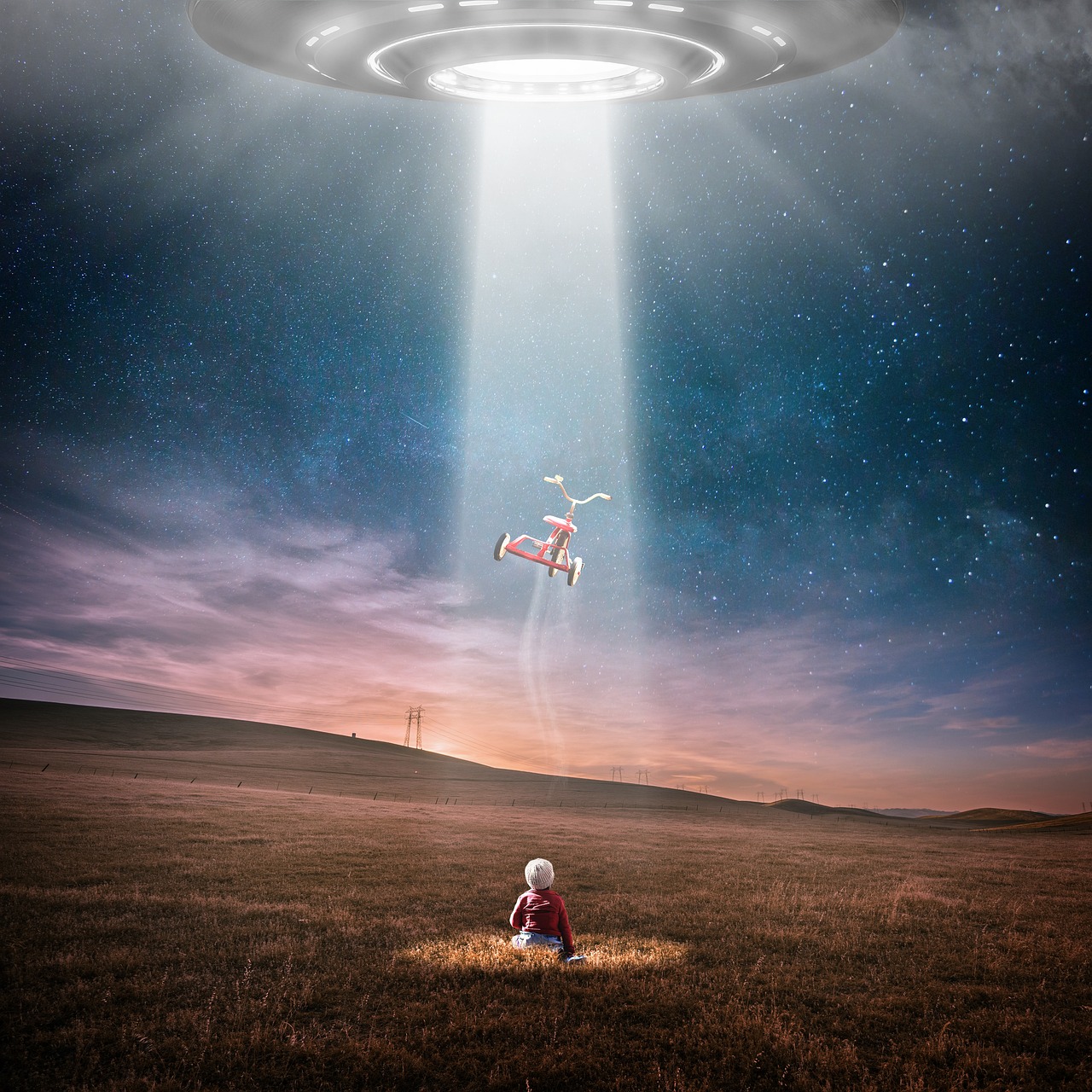
Dopo una giornata di lavoro, quando il cielo si tinge di grigio o il tardo pomeriggio cala, spesso l’unica via di fuga è immergersi in una serie di intrattenimento. In queste serate, tra il torpore e la distrazione, ho iniziato a esplorare alcune produzioni che trattano di teorie su antichi cataclismi mai confermati scientificamente e di avvistamenti alieni. Mentre guardavo, nella mia mente si formavano pattern fantasiosi e speculazioni di ogni tipo, fino a quando non mi sono fermato a riflettere: la narrazione sugli alieni, sulle civiltà perdute e sui cataclismi che avrebbero cancellato interi continenti in tempi non troppo remoti, senza lasciare traccia, non è forse simile, per struttura e finalità teorica, a quelle narrazioni che spesso sentiamo da politici ed economisti sullo stato della nostra economia? Queste storie, benché sembrino distanti, hanno in comune una struttura narrativa che spesso va oltre la realtà tangibile. Comprendo e condivido le critiche che si possono sollevare contro questa analogia, ma mi domando: sono davvero così diverse queste due narrazioni? Vorrei approfondire questa riflessione partendo proprio da un episodio di una delle serie che ho guardato, per esplorare più a fondo questa intrigante somiglianza.

Defining Intelligence as a Cognitive Capacity – A Reply to a Reader

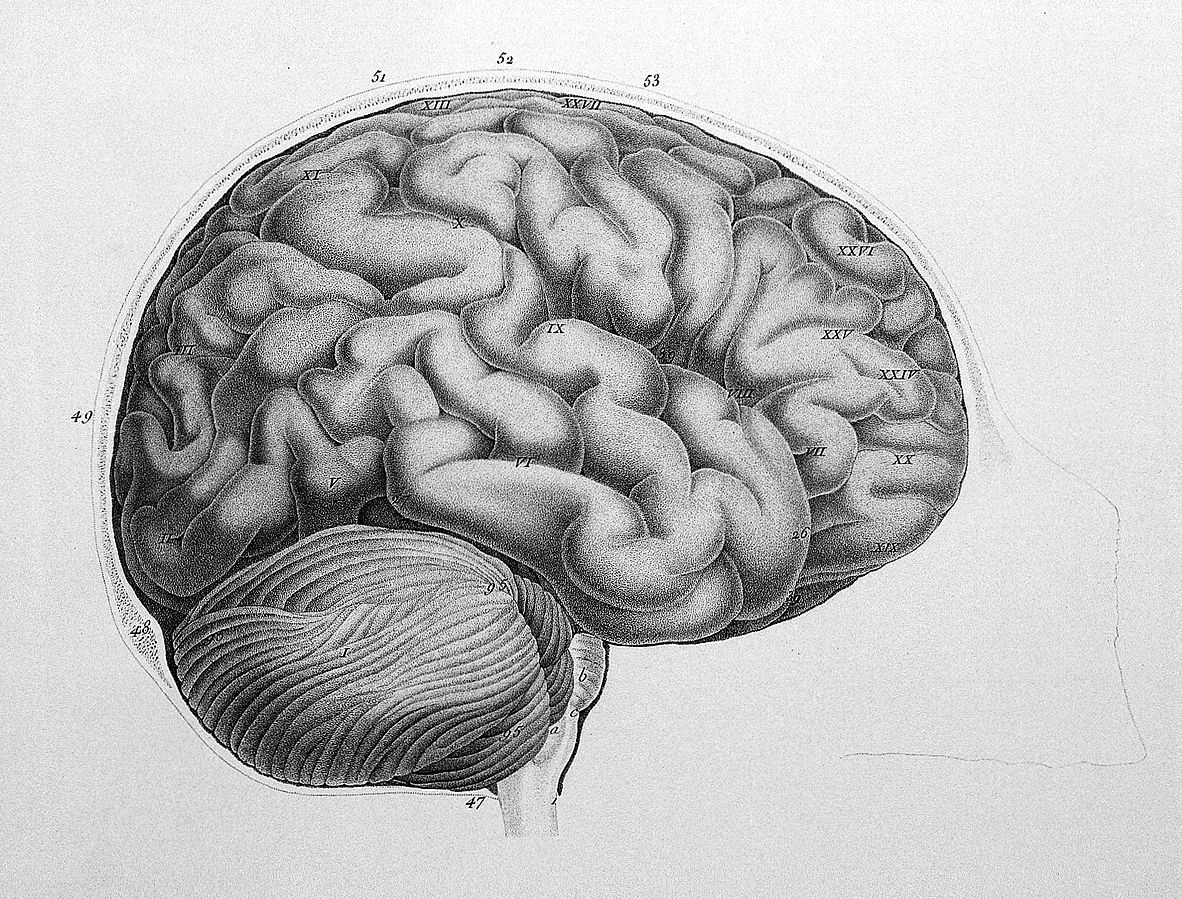
https://commons.wikimedia.org/wiki/File:Diagram_of_the_brain._Wellcome_L0008294.jpg

How do you define intelligence in the cognitive domain?

I never delved deeply into the intelligence-mind problem. Defining intelligence is a slipper problem and, in my opinion, not necessarily very interesting. Moreover, there is too much talk about it, which shows that we are possibly hitting a wall. When I first read Turing and approached the philosophy of mind, I never believed there was much promise in that space (definition of intelligence) for many reasons. One reason is the significant confusion about what we can confidently claim to know versus what remains unknown or not fully understood from the neurobiological perspective. When Turing tackled the topic, he simply demonstrated that intelligence essentially boils down to performance when it can be concretely defined. In other words, if x produces y, and if a human would produce y in a manner that we, as humans, would deem intelligent, then x is intelligent (thus, the trick lies in constructing a transitive argument for comparison, etc., which is fair enough for programmers or pure logicians attempting to create some form of computing machine). Turing was very candid in setting limits to the thought experiment. I believe that intelligence pertains to a certain type of performance that necessitates specific properties at the causal level.

[I] If S produces x through I, where I has causal capacity such that x is not produced by chance and x achieve a solution for a given problem, then S is intelligent.

A Pluralistic Understanding of Time – Time as Eternal truths

Abstract

‘Time is said in many ways’, to paraphrase Aristotle. In this essay, time is comprehended in four distinct yet parallel ways: subjective time, event time, conventional time, and landscape time. Subjective time measures the interval between two subjective experiences recorded by memory. Event time represents the order of events involved in a process. Conventional time is the measurement of a given physical interval registered by a clock and intersubjectively assumed as common. Landscape time refers to the current disposition of all changing facts in the universe. These four types of time are independent and autonomous from one another, as the essay will demonstrate. Although distinct, these time types can be related, collectively contributing to our understanding of the concept of time and how we use the term in language. The conclusion supports a pluralistic view of time, where time is partitioned into four categories, each explaining a distinct portion of reality.


Introduction – Time in the History of Philosophy

Time was not a major concern of the Greek-Roman philosophical tradition. From one side, time was conceived as the form of the appearances, that is of what it does not exist. Parmenides, essentially, banned time from his ontology, as the only things that exist is ‘the being,’ which was to be intended as eternal, meaning a-temporal, an object that does not change, hence does not exist in time.[1] Any subsequent metaphysical approach which endorsed implicitly or explicitly any form of Parmenidean ontology (something that does exist in its perfection because it never changes) is, in a way or another, banning time in a very fundamental sense.[2] Both Plato and Aristotle essentially (here intended ‘literally,’ i.e. in their understanding of what ‘really exists’) endorsed Parmenides’ vision. For some interesting reasons, today this notion is called ‘Platonic,’ but the conception of a perfect unchanging being independent from how things look like in and through time is, in fact, originated by Parmenides.

Opacità Referenziale – Possibile Non Assurdità Degli Enunciati Mooreani

https://it.freepik.com/vettori-gratuito/gocce-d-acqua-isolati-su-sfondo-trasparente_8308849.htm#query=pioggia&position=16&from_view=search

In questo post tratterò del tipo di enunciati definiti mooreani[1]. Tali enunciati sono composti da due parti congiunte da un connettivo logico: la prima parte (fattuale) enuncia che p; la seconda parte (soggettiva) afferma che il soggetto S non crede che p. Generalmente assumono la forma “p e non credo che p”, ad esempio “Piove e non credo che piova”.

Lo scopo che mi prefiggo in questo breve testo è quello di delineare alcuni specifici e semplici contesti linguistici ed epistemici nei quali è possibile emettere enunciati simili senza che si dia alcuna assurdità. Tale scopo è analogo a quello delle selfless assertions[2], ovvero delle particolari forme di asserzione in cui chi asserisce, per particolari ragioni, non crede a quanto sta asserendo.

Considerazioni sul concetto di rappresentazione o immagine nel fenomenismo

Abstract
L’articolo mira a mettere in luce con breve sintesi la paradossalità delle teorie epistemologiche che ammettono la tesi fenomenista. In base ad essa, la conoscenza è una mera produzione di rappresentazioni che, in quanto soggettive, rendono dubbio ogni possibile giudizio sul mondo. Esistono teorie alternative, la filosofia dell’organismo di Whitehead ne è un esempio. Essa propone una spiegazione del rapporto tra soggetto ed oggetto che radica in una concezione relazionale della materia, in cui il differenziale tra conoscente e conosciuto si annulla, perché entrambi i poli si istituiscono come elementi costitutivi dell’esistenza dell’altro.