Press "Enter" to skip to content

Categoria: Filosofia della scienza

Nature is Not Written in Mathematical Language

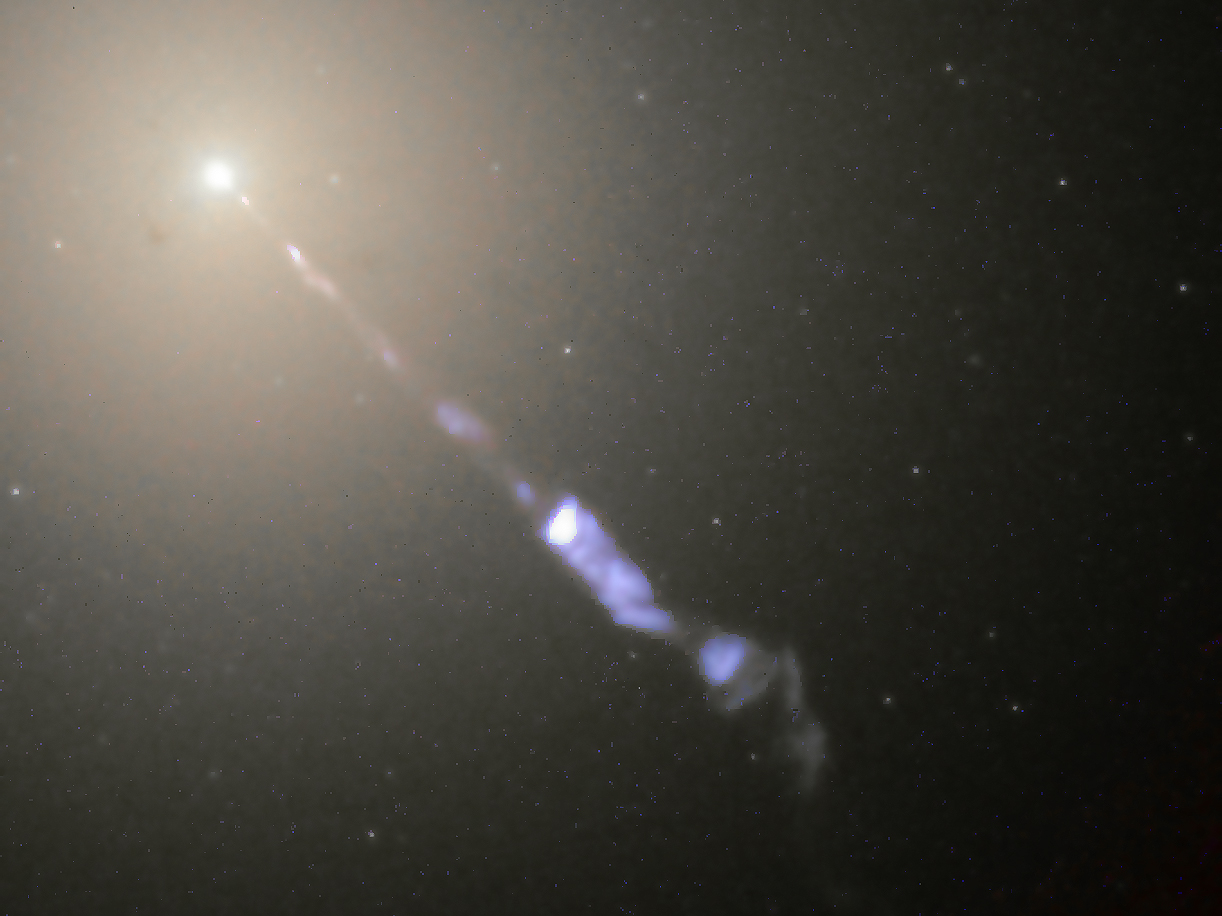
By NASA and The Hubble Heritage Team (STScI/AURA) – M87 jet.jpg, Public Domain, https://commons.wikimedia.org/wiki/Special:Redirect/page/40397237

Introduction – Why Galileo?

Galileo Galilei is often portrayed as one of the greatest scientists ever lived, primarily because everybody knows him. In fact, for all the standard statements around the ‘best’ philosopher or mathematician, rarely reasons are given or an alternative candidate pool is listed.  For example, it seems questionable to consider this ‘candidate’ existing as there is no clear ‘good order’ to be established within the list of ‘the greatest scientists’ as there usually no explanation for the rule through which an item was selected among others. It is likely the case that, for some circumstantial condition, a given name, possibly ignored during their life, was then passed to the common vocabulary to mean a particular representative of the set they belong. For example, it is my extensive experience that almost no one knows much about Albert Einstein’s life or research, but everyone today (2026) refers him to mean the ‘exemplary scientists’ (once it was Newton, known progressively less by the ‘wide public’).

When it comes to Galileo, he undoubtedly was an important figure, but this does not say much. What instead I want to argue against something often considered an obvious mantra: ‘Nature is written in mathematical language’, a short encapsulation of the early revolution in physics from the Aristotelian to the ‘modern’ notion of it. To this day, the ‘envy’ of other sciences and research fields is still based on the ‘mathematical aspirational dogma’, that is, mathematics applications discriminate the ‘hard core’ science from everything else.

“Philosophy [nature] is written in that great book which ever is before our eyes — I mean the universe — but we cannot understand it if we do not first learn the language and grasp the symbols in which it is written. The book is written in mathematical language, and the symbols are triangles, circles and other geometrical figures, without whose help it is impossible to comprehend a single word of it; without which one wanders in vain through a dark labyrinth.”[1]

First, I will try to prove that this statement is wrong, that is, false. Second, I will argue that this is not how ‘science’ sees the world and, finally, that this is not how we should see it and, in fact, it is impossible otherwise. Let’s start from the beginning but, before that, a specification. I am not ‘against’ Galileo about whom I have my own opinion. My arguments equally apply to any assumed philosophy of science based on similar premises or that explicitly or implicitly endorse it. As Galileo’s formulation is as famous as ‘clear’, we shall use it in proxy of something potentially more elaborated and, as such, more obscure.
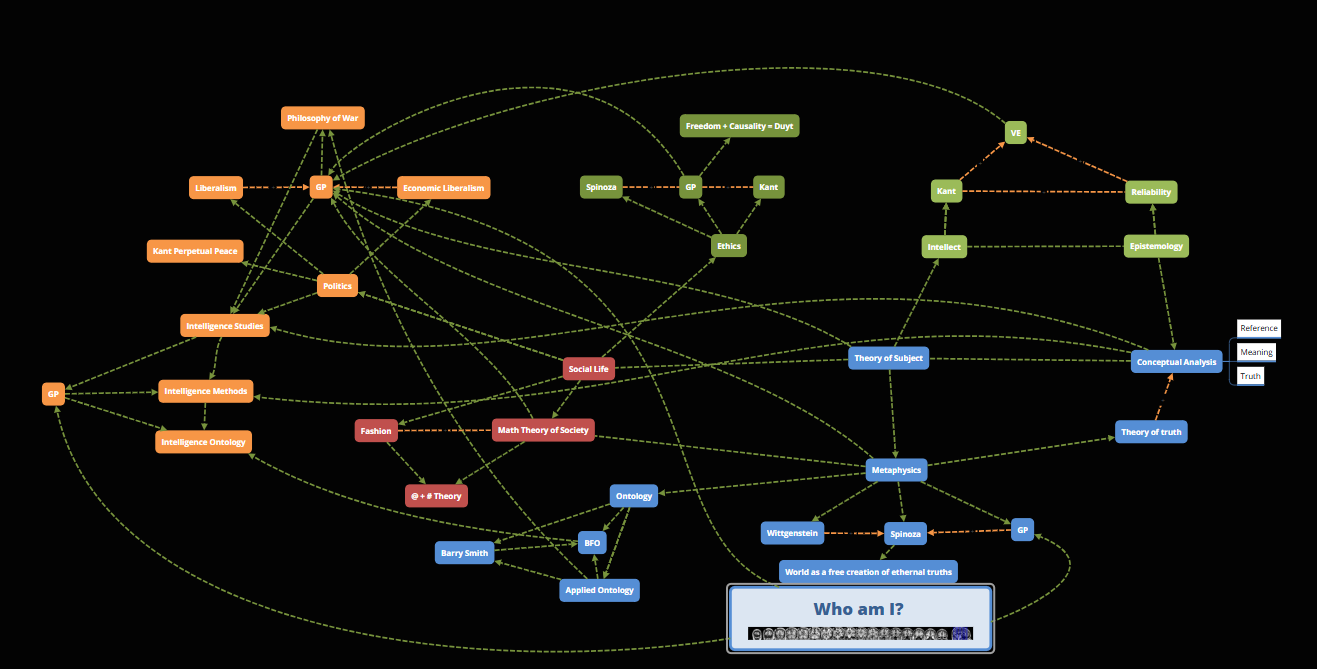
Diagrams’ Ontology and Epistemological Commitments

An Unexpected Journey into Everyday Thinking

Prologue – From Where All This Started

I recently read Philosophy of Physics – Space and Time written by the philosopher Tim Maudlin.[1] It is a short, dense book intended to be readable by everyone, but, as usual with these types of works, it requires very careful attention from the readers and effort to be unpacked, as we would wish from an excellent philosophical essay. Despite its shortness, Philosophy of Physics has been one of the most interesting readings on philosophy of science I have had in quite some time, not only because it had been a long time since I read a book or research paper in this philosophical area.[2] There are remarkable considerations in Maudlin’s work that would be worth an essay on their own, but here I am mentioning this reading because it has been the philosophical starting point for this essay, because it clearly posed specific ontological and epistemological questions when analyzing diagrams, mind maps and sketches.

Frederick Taylor e i principi del management scientifico


No system of management, no single expedient – within the control of any man or any set of men can insure continuous prosperity to either workmen or employers. Prosperity depends upon so many factors entirely beyond the control of any one set of men, any state, or even any one country, that certain periods will inevitably come when both sides must suffer more or less. It is claimed, however, that under scientific management the intermediate periods will be far more prosperous, far happier, and more free from discord and dissension. And also, that the periods will be fewer, shorter and the suffering less.

Frederick Taylor – The Principles of Scientific Management

Frederick Taylor (1856-1915) è considerato tra le figure più influenti del XX secolo. Nato alla metà dell’ottocento, Taylor è colui che porta a compimento la riflessione sulla riforma del lavoro che, curiosamente, si associa normalmente allo sviluppo e all’evoluzione della rivoluzione industriale, già avviata nel XVIII secolo e conclusa, nella sua prima fase, nel XIX secolo. Ancora oggi, quando si pensa ai grandi opifici, organizzati secondo la catena di montaggio, si retrodata questa immagine sino agli albori della prima rivoluzioni industriale. Questa operazione è tuttavia impropria giacché la prima fase della rivoluzione industriale vede semplicemente la concentrazione della forza lavoro dispersa e l’impiego di certe tecnologie a uso di energia non animale o umana, le due prime e fondamentali “rivoluzioni”.

E’ solo successivamente, ovvero negli anni subito precedenti alla prima guerra mondiale, che si assiste ad un serio ripensamento dei fondamenti stessi dell’organizzazione del lavoro nelle fabbriche fino ad allora centrate sull’idea di obiettivi a parametri fissi e sulla “rule of thumb” (“regola del pollice” ovvero del buon senso), disgiunti dalle modalità attraverso cui tali parametri dovevano venire realizzati. Ad esempio, ad un lavoratore veniva richiesto che egli raggiungesse una certa quota di lavoro a giornata, come spalare tot chili di carbone in otto ore, senza che gli venisse spiegato come fare o si sapesse dell’esistenza di un metodo ottimale. Ciò che contava era un risultato fissato ex ante e come raggiungerlo era affare del lavoratore. Questo tratto arbitrario nell’impiego della forza lavoro emerge compiutamente proprio in The Principles of Scientific Management, in cui Taylor porta continuamente esempi di cattivo impiego della manodopera la quale dissipa inutilmente e spontaneamente energie senza costrutto.

Alcune osservazioni sul concetto di realtà


Nel recentissimo libro Che cos’è reale?. La scomparsa di Majorana [Neri Pozza Editore 2016] il filosofo Giorgio Agamben, il quale è stato anche attore cinematografico, avendo interpretato il ruolo dell’apostolo Filippo nel celebre film Il Vangelo secondo Matteo di Pier Paolo Pasolini (1964), riesamina la questione della misteriosa scomparsa del fisico Ettore Majorana, nato a Catania nel 1906 (come ricorda l’autore, la questione era già stata analizzata, ad esempio, dallo scrittore e politico militante Leonardo Sciascia in un libro del 1975, e dal fisico Erasmo Recami in un libro del 1987).

Kuhn e la struttura delle rivoluzioni scientifiche

Thomas-Kuhn

Iscriviti alla Newsletter!

Consigliamo – A cura di Giangiuseppe Pili e l’Introduzione schematica all’epistemologia


Abstract

In questo articolo considereremo la filosofia della scienza di Thomas Kuhn nella sua formulazione classica de The Structure of Scientific Revolutions pubblicato dalla Chicago University Press nel 1962. Non essendo io un esperto della filosofia della scienza, consiglio il lettore di approfondire personalmente la filosofia di Thomas Kuhn, presentata qui in modo inevitabilmente sommario.


The Structure of Scientific Revolutions è un saggio di filosofia della scienza di Thomas Kuhn, pubblicato nel 1962 ed è ancora oggi considerato uno dei classici, se non il principale testo di riferimento, della stessa disciplina, un “paradigma” anche se in senso filosofico. Si tratta di uno dei testi maggiormente citati nella filosofia della scienza e, in generale, nella filosofia analitica (Bird (2004)).