Con Davide Rondoni, esteticamente la poesia è un’allodola di fuoco, alla leggiadria del sole abbagliante, tramutando l’umidità ed il fumo in un piercing emozionale o sentimentale, per una lingua che gusti direttamente dal cuore. Cecilie ha posato al mezzobusto, per uno scatto al bianconero. C’è il piercing al naso, con la musicalità delle nacchere che potrà influenzare il passo di danza, se l’orecchino “lunare” non mostrerà sempre la stessa faccia. Ricordiamo che Cecilie ha studiato psicologia sociale e culturale. La dialettica riguarderà lo svelamento intimo d’una personalità, alla “cassa di risonanza” con l’alterità. Ma quanto l’ala a “cucchiaio” del vestito, complice la bretella, si farà risucchiare da una “tromba d’aria” della mano destra? C’è un glamour psicanalitico, nel transfert, al di là dell’aiuto che il terapeuta dà al paziente disinibito?
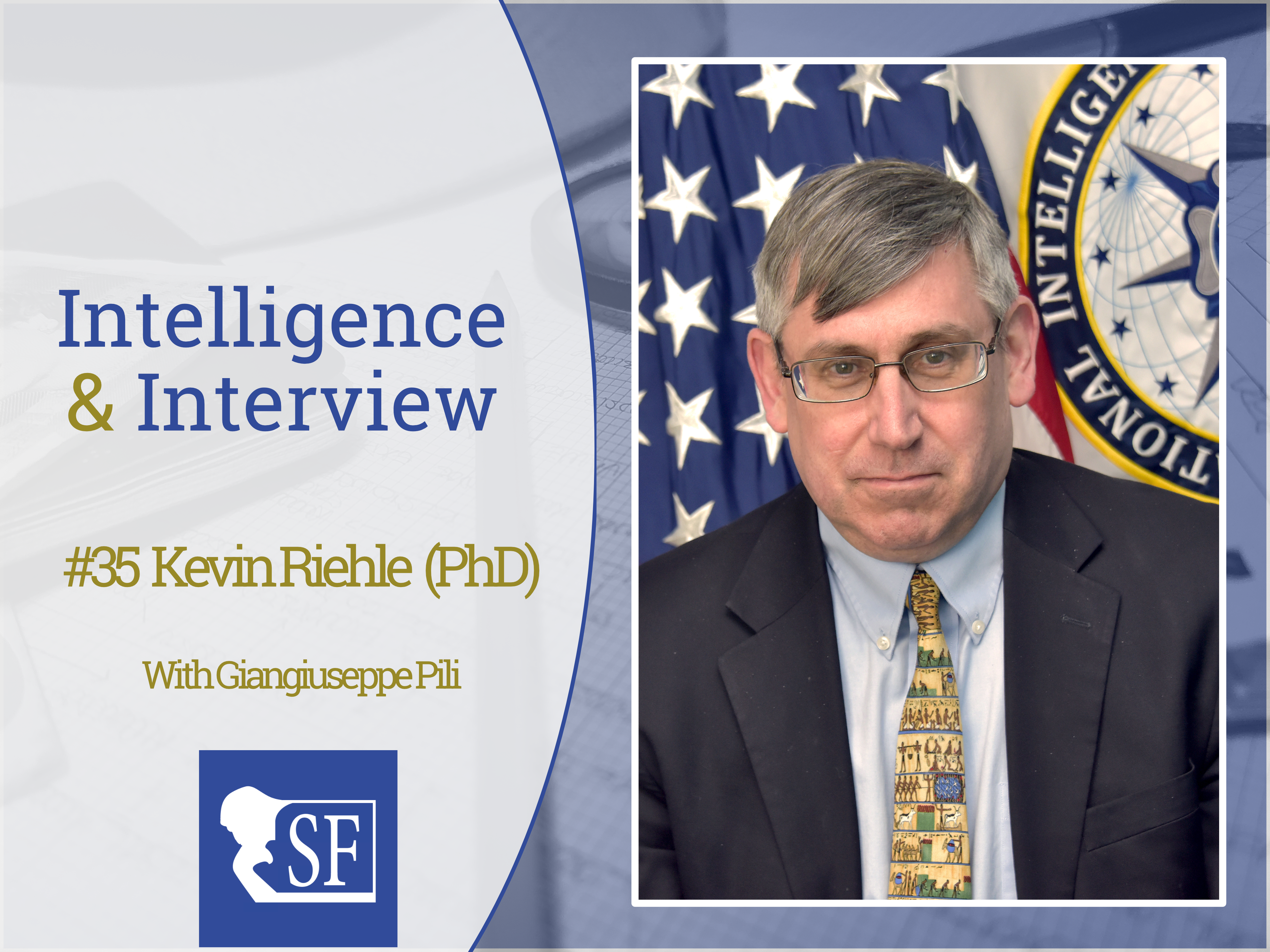
After, well, thirty-four publications (plus the others already scheduled), it was time to cover one of the most fascinating topics in intelligence history. Yes, we are talking about the Russian intelligence and the KGB from the Czarist foundation to our days. The KGB was considered by many as the most powerful intelligence service globally, which should probably raise immediately the question of where and under what conditions such a powerful state institution is indeed legitimate in the first place. This is already enough for presenting this interview but let me add a couple of observations. We should not consider the KGB as a rule in the intelligence realm or as an example to be followed. We must consider it as what to avoid at any cost. Intelligence history is never “just” history (assuming that there is history that is “just” history). For this reason, I approached Professor Kevin Riehle (National Intelligence University, USA). This interview will accompany the reader from the inception of the Russian intelligence to the current institutional frame and organization. It is a deep dive into the Russian intelligence world. The first time I met Kevin, we were in Aberystwyth (back then… in person). We briefly discussed the relationship between intelligence and democracy and the importance of grounding the intelligence activity to the values inscribed into the constitution. More recently, during research on intelligence teaching, I had the pleasure to read one of his papers, this one on intelligence education (highly recommended), and to hear his presentation at the last International Studies Association Convention. It is then with my distinct pleasure to publish the interview on Scuola Filosofica – for those who don’t know it yet; it is one of the leading cultural blogs in Italy. In the name of Scuola Filosofica Team, our readers, and myself, Giangiuseppe Pili, Kevin: thank you!
The views expressed in this article are those of the author and do not reflect the official policy or position of the Department of Defense or any U.S. government agency.