
Press "Enter" to skip to content

Scuolafilosofica Posts

Is a chess player and intelligence analyst? – Chess and intelligence

FelixMittermeier – https://pixabay.com/it/photos/scacchi-pezzi-degli-scacchi-2730034/

Pili, Giangiuseppe, (2019) “Is a chess player and intelligence analyst? How to learn from chess how to improve intelligence analysis”, American Intelligence Journal, Vol 36, Issue 2, 74-85


It is with a distinct pleasure and honor that I announce my last publication in the esteemed American Intelligence Journal – The journal for intelligence professionals! AIJ is one of the oldest American journals of intelligence studies and it is one of my favorites. When I read the email today my heart jumped (safely!, safely!). For a young researcher in the field of intelligence grow up with the documentaries of the WWII, and personal appreciation for what US have done during the Cold War, I couldn’t have been more happy to see my name inside that journal. I want personally to thank again many people that helped me in delivering the paper: Michael Landon-Murray (assistant professor), Claudio Selleri (Le Due Torri, Publisher), Herman Grooten (IM, trainer and great chess writer), Uberto Del Prato (CM, and environment intelligence practitioner), Roman Kolodii (intelligent and careful reader), Matteo Canini (neuro-psychologist who provided the psychological literature about chess and intelligence), and last but not least the editor of the journal, professor William Spracher. Thank you all for all your help and support!

Improving your business awareness through philosophy – Structured Classification Analysis for Little Business Firms

Interested in the project? – Write us & ask for it!

scuolafilosofica_AT_gmail.com


Project denomination – “Improving your business through philosophy – Semantic Classification System for Little Business Firms” – Ontological Pizzeria! – Ancora dei Baruffi – Pizzeria Storica

Partners & Organizing Institutions – Azione Filosofica (Cultural Association), Scuola Filosofica (Blog & Social Media), Ancora dei Baruffi – Pizzeria Storica (Restaurant – Take away)

Project Manager – Dr Giangiuseppe Pili

Project Roles – Project Manager, Analyst, Ontological Designer & Video Maker + External Referee

Philosophical lessons learned these days

As my embedded philosophical attitude is hard to die, after long days in shock and shut eyes, I try now to consider some lessons learned directly from my experience.

First, people were irrational in the past and they are still irrational in the present. No matter of what we tell to ourselves in this “technological” age, there will be still irrationality among us. This is true everywhere but it is especially true in places in which there is no way to ground a rational open debate without getting out with fear of being considered a dinosaur. Irrationality is the plague of our time, the time of the human beings. We should fight it with all our intelligence but the reality is that intelligence is not much, artificial or human, especially when a certain threshold of spread fear and panic are already inside most of the minds. There is no way to consider numbers and facts because the behavior is so far from logic that the only thing you can do is to try to keep calm, breath and think clearly that life is not in your hands. Therefore, others’ life is not in your hands either. 

The mystery of capitalism is doing things with documents

Abstract

In this post I analyze briefly why the mastery of documents is a necessary art in the age of technology. Documents are indispensable for the very existence of capitalism and it is how we express our own capital. However, the nature of documents (their ‘ontology’) is quite complex but it can be easily understood with a bit of curiosity and perseverance. Finally, I will consider how to apply the lessons learned in order to maximize the impact of your own capital.


Introduction

The title of this post is basically a combination between two titles The mystery of capital and “How to do things with documents”. The first is a book written by the Chilean economist Hernando de Soto (1941), which is a cornerstone of the economic development in the third world. Instead, “how to do things with documents” is a Barry Smith’s slogan which is a paraphrase of the John Austin’s philosophical masterpiece How to do things with words (1962), which was the first attempt toward a philosophical foundation of the speech acts. For instance, saying “check” in the appropriate time and circumstance count as an action on the chessboard. Smith is a philosopher that “left the mothership of philosophy” to land to something different, something closer to computer scientist than anything else.

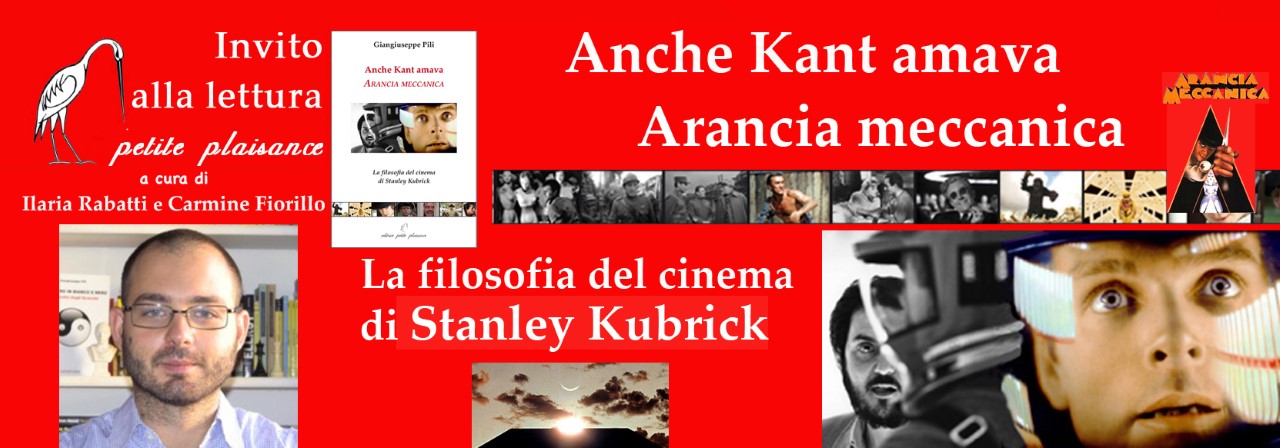
Anche Kant amava arancia Meccanica – La filosofia di Stanley Kubrick

Pili G., (2019), Anche Kant amava Arancia Meccanica – La filosofia di Stanley Kubrick, Pistoia: Petite Plasiance


Ebbene sì!, è uscito anche prima del 2020 quello che considero uno dei miei migliori lavori in lingua italiana! Anche Kant amava Arancia Meccanica – La filosofia di Stanley Kubrick uscito per Petite Plaisance! La prefazione del professor Silvano Tagliagambe impreziosisce il volume con il suo taglio preciso e puntuale. Ringrazio il dottor Chiariglione per avermi invitato a jointare la sua bellissima collana sul cinema e filosofia. Il libro è stato dedicato a tre tra i miei più cari amici lombardi. Qui potete trovare il link dove visionare e acquistare il volume. Se desiderate acquistare questo libro insieme ad uno dei libri della collana di Scuola Filosofica potete scrivermi direttamente a scuolafilosofica_AT_gmail.com!

Questo è uno dei migliori lavori che abbia mai scritto e spero che il pubblico dei lettori possa gradire la lettura quanto io ho tratto gioia dallo scriverlo. 

Norme costitutive

geralt (pixabay.com)

Ci proponiamo di approfondire il pensiero di Carcaterra sulle norme costitutive, in rapporto ai performativi.

La discussione specifica sul tema delle norme costitutive è stata avviata dalle due monografie di Carcaterra Le norme costitutive, del 1974, e La forza costitutiva delle norme, del 1979. In questi due lavori, Carcaterra svolge una critica del modello prescrittivista.

Storie del Novecento – Il mondo diviso tra destra e sinistra

Carissimi lettori e lettrici di Scuola Filosofica,

a breve il secondo appuntamento con i seminari di Scuola Filosofica all’Accademia d’arte di Cagliari con una novità: la partecipazione dell’editore “l’Universale” di Cagliari.

L’incontro, dal titolo “Storie del Novecento – Il mondo diviso tra destra e sinistra” si svolgerà il 29 febbraio presso il Lazzaretto di S. Elia a Cagliari a partire dalle ore 16 e vedrà la partecipazione di:

– Eleonora Todde (ricercatrice dell’Università di Cagliari)

– Stefano Poma (editore l’Universale)

– Giacomo Filippo Carrus (presidente dell’associazione culturale Azione Filosofica)

– Filippo Rossi (giornalista, scrittore e direttore artistico del Caffeina festival)

Qui di seguito il link della pagina Facebook dell’evento https://www.facebook.com/events/1472427636254586/, condividete!

Vi aspettiamo numerosi!

Norme di validazione

geralt (pixabay.com)

[1]In astratto, l’efficacia di un principio si auto-conferma, e quindi appare se si manifesta come vigente, anche quando quel principio è adoperato per validare o invalidare norme secondarie in conflitto con quel principio. E’ questa funzione della validazione o dell’invalidazione l’essenza del principio su cui poggiano siffatte norme primarie, sicché si comprende il senso per il quale la realtà stessa della validazione o invalidazione, nel suo operare costante e concreto, conferma il principio e la ratio delle disposizioni in questione. Si tratta, essenzialmente, di metanorme, ossia di norme che si occupano di altre norme.